The best time to visit Vancouver depends on what you want to do. July and August are warm, dry and busy; May, June and September offer mild weather with fewer crowds; and November to March is wet in the city but quiet, good value and snowy on the mountains. This guide compares every month and links to a detailed guide for each one, with weather, events, things to do and travel tips.
Vancouver weather by month
| Month | Avg high / low | Days with rain | Sunshine (hours) | What it is like |
|---|---|---|---|---|
| January | 7°C / 1°C | 20 | 60 | The coldest and darkest stretch of the year, but mild by Canadian standards |
| February | 8°C / 2°C | 16 | 91 | Still winter, with the first signs of spring by the end of the month |
| March | 10°C / 3°C | 18 | 135 | Early spring: changeable, with blossoms and fresh snow on the peaks |
| April | 13°C / 6°C | 15 | 185 | Peak blossom season, mild and increasingly bright |
| May | 17°C / 9°C | 13 | 223 | Late spring: green, bright and pleasantly mild |
| June | 20°C / 12°C | 12 | 227 | The start of summer, with the longest days of the year |
| July | 22°C / 14°C | 6 | 290 | Peak summer: warm, sunny and the driest month of the year |
| August | 22°C / 14°C | 6 | 277 | Warm, dry high summer, with the PNE and late-summer evenings |
| September | 19°C / 11°C | 9 | 213 | Warm early autumn, often the best-kept secret of the year |
| October | 14°C / 7°C | 15 | 121 | Colourful autumn, with the rainy season starting |
| November | 9°C / 4°C | 20 | 60 | The wettest month, with the holiday season starting |
| December | 7°C / 1°C | 21 | 57 | Festive, dark and wet in the city, snowy in the mountains |
Averages for Vancouver International Airport, 1991 to 2020, from Environment and Climate Change Canada (sunshine 1981 to 2010).
Best time to visit Vancouver for…
- Sunshine and beaches: July and August, the driest and sunniest months. See our beaches guide.
- Good weather with fewer crowds: May, June and September.
- Cherry blossoms: late March and April.
- Skiing close to the city: December to March at Grouse, Cypress and Seymour, and longer at Whistler.
- Festivals: June to August for outdoor festivals and fireworks; September and October for film, theatre and writing festivals.
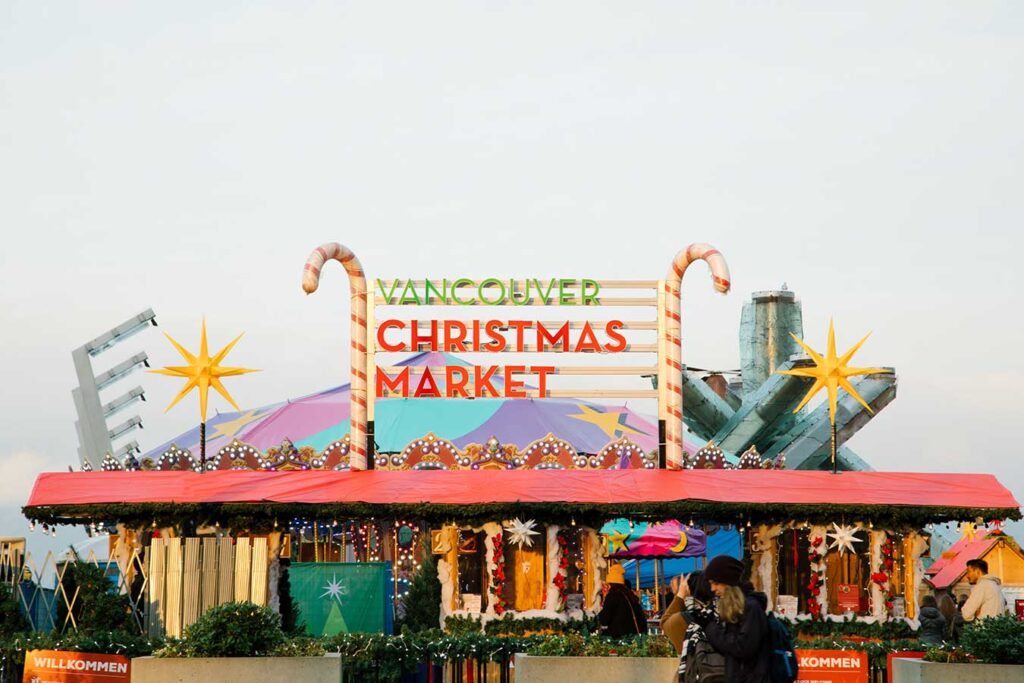
- Holiday lights and Christmas markets: late November and December.
- Lowest prices: January, February and November.
Vancouver by season
Winter (December to February)
Mild, wet and grey in the city, with highs around 7°C, and snowy on the North Shore mountains. Ski season, Lunar New Year, Dine Out Vancouver and holiday lights. Read the guides for December, January and February.
Spring (March to May)
Blossoms, longer days and steadily drier weather, with highs rising from about 10°C to 17°C. Read the guides for March, April and May.
Summer (June to August)
Warm and dry, with highs around 20°C to 22°C and up to 16 hours of daylight. Beach days, hiking and the city’s biggest festivals. Read the guides for June, July and August.
Autumn (September to November)
Warm and quiet in September, colourful in October and rainy in November, when holiday season begins. Read the guides for September, October and November.
Plan your visit
For specific dates, use the Vancouver events calendar or see what’s on today. Then build your days with the trip planner and our Vancouver itineraries.
Frequently asked questions
What is the best month to visit Vancouver?
For weather, July and August. For a balance of good weather, lower prices and fewer crowds, May, June and September.
What is the rainiest month in Vancouver?
November, December and January are the wettest, each with about 170 mm of precipitation and rain on about 20 days.
When is the cheapest time to visit Vancouver?
January, February and November usually have the lowest hotel rates, apart from holidays and major events.
More local guides
- Things to Do in Vancouver Today
- Vancouver in December: Weather, Events and Things to Do
- Vancouver in January: Weather, Events and Things to Do
- Vancouver in November: Weather, Events and Things to Do
- Vancouver in February: Weather, Events and Things to Do
- Vancouver in October: Weather, Events and Things to Do