City guide · Vancouver & Burrard Peninsula
New Westminster city guide
British Columbia's first city: a hillside of heritage homes above the Fraser, with a riverfront boardwalk and five SkyTrain stations.
01 At a glance
Welcome to New Westminster
New Westminster is a compact, historic city on the Fraser River, known for its heritage neighbourhoods, riverfront parks and easy SkyTrain links across the region. It suits families, commuters and history lovers who want a small-town feel in the centre of Metro Vancouver.
- Vibe
- Historic, compact, riverside, walkable
- Best for
- Heritage walks, riverfront strolls and car-free living
- Getting around
- Expo Line SkyTrain & Q to Q Ferry
New Westminster at a glance
New Westminster climbs a steep hillside above the north bank of the Fraser River, about halfway between downtown Vancouver and the Fraser Valley. It is small in area, at just over 15 square kilometres, yet home to nearly 79,000 people, which makes it one of the most densely populated cities in Canada. Locals almost always call it New West.
The city has a strong sense of its own history. Victorian and Edwardian houses line the streets around Queen’s Park, old brick storefronts face Columbia Street downtown, and the riverfront has been opened up with boardwalks and parks. Uptown, centred on Sixth Street and Sixth Avenue, feels like a classic neighbourhood high street, while Sapperton to the east has the Royal Columbian Hospital and a growing cluster of new housing. Across the river, Queensborough sits on the eastern tip of Lulu Island and has a more suburban, family feel.
New West suits people who want character, walkable streets and SkyTrain access in a city that still feels like a town. It is popular with young families, first-time buyers and commuters heading to Vancouver, Burnaby or Surrey.
Neighbourhoods at a glance
- Downtown: Columbia Street, the Quay and the riverfront, with condo towers and heritage commercial blocks.
- Uptown: the Sixth Street and Sixth Avenue shopping area, surrounded by older apartments and houses.
- Queen’s Park: a heritage residential area around the city’s main park, with some of its finest historic houses.
- Sapperton: East Columbia Street, Royal Columbian Hospital and the former Brewery District redevelopment.
- Queensborough: across the river on Lulu Island, with newer homes and dyke-top trails.
A short history
New Westminster sits on the traditional, unceded territory of Halkomelem-speaking Coast Salish peoples. The Kwantlen people had villages along this stretch of the Fraser, and today the qayqayt First Nation is the Nation most closely tied to the city; local schools formally acknowledge its traditional territory. The Fraser was a great salmon river and highway for these communities for thousands of years.
In 1858, during the Fraser Canyon Gold Rush, Colonel Richard Clement Moody and the Royal Engineers, Columbia Detachment, chose the site and laid out a new capital for the Colony of British Columbia. Queen Victoria gave the city its name, which led to its long-time nickname, the Royal City. New Westminster was incorporated on 16 July 1860, making it the first municipality in British Columbia with an elected council. It remained the colonial capital until the mainland and Vancouver Island colonies were united in 1866.
Through the late 1800s and early 1900s the city prospered as a port, lumber town and salmon-canning centre, with a busy waterfront and railway connections. Much of downtown burned in the Great Fire of 1898 and was rebuilt in brick. The arrival of SkyTrain in the 1980s and the revitalization of Westminster Quay began a long renewal that continues today. In February 2026 the old Pattullo Bridge to Surrey closed for good, replaced by the new stal̕əw̓asəm Bridge, which carries an official name in a First Nations language.
Top things to do in New Westminster
The waterfront
- The Quay boardwalk runs along the Fraser below downtown, with views of tugboats, log booms and the river bridges.
- The River Market at Westminster Quay is a small indoor market with food stalls and local vendors, a handy stop on a riverside walk.
- Westminster Pier Park extends the waterfront east toward downtown, with lawns, play areas and a long waterfront boardwalk.
- The Q to Q Ferry is a small passenger ferry between the Quay and Queensborough, a fun short crossing of the Fraser.
Culture and history
- Irving House, built in 1865, is one of the oldest intact houses in the Lower Mainland and is the centrepiece of the New Westminster Museum and Archives.
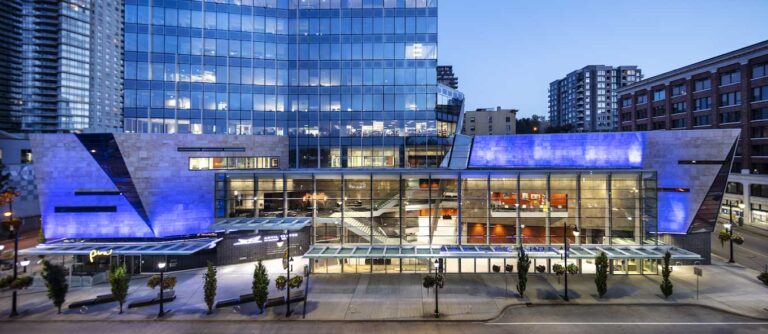
- Anvil Centre at Columbia and Begbie streets is the city’s civic and cultural hub, home to the New Westminster Museum, a theatre and gallery space.
- Columbia Street downtown is lined with heritage buildings and is still known for its bridal shops, a reminder of its days as the region’s “golden mile” of retail.
- Self-guided heritage walks through Queen’s Park and Brow of the Hill show off well-preserved houses from the late 1800s and early 1900s.
Parks and nature
- Queen’s Park is the city’s main park, with forest paths, gardens, a petting farm in summer, playgrounds, Queen’s Park Stadium and Queen’s Park Arena, home of the Salmonbellies lacrosse club.
- Hume Park and Glenbrook Ravine offer quieter green space and trails in the east end.
- Queensborough has dyke-top trails along the Fraser with river and mountain views.
Family fun
- Pier Park’s play areas, the Queen’s Park playground and spray park, and the ferry ride to Queensborough make an easy family day with no car needed.
- The city’s indoor pools and community centres are busy year-round, and the riverfront is flat and stroller-friendly.
A suggested walking route
Start at New Westminster Station and head down to the Quay boardwalk. Follow the river east to Westminster Pier Park, then climb up to Columbia Street to look at the heritage storefronts and Anvil Centre. From there, walk uphill through the residential streets to Irving House and on to Queen’s Park. The route is short in distance but steep, so allow time and wear comfortable shoes. Benches along the boardwalk make good rest stops on the way.
Food and drink
New West’s food scene is spread across a few walkable districts. Downtown, Columbia Street and Front Street have a mix of pubs, casual eateries, brunch spots and international kitchens, and the River Market adds quick bites by the water. The blocks around New Westminster Station are handy for a meal before or after a SkyTrain ride.
Uptown, Sixth Street and Sixth Avenue have a wide spread of casual restaurants, bakeries and long-running family places, many serving cuisines from across Asia. Sapperton’s East Columbia Street has an independent, neighbourhood feel, and the former Brewery District site near Sapperton Station has added newer restaurants and cafés. New West has also built a small craft beer scene, with taprooms close to downtown and Sapperton.
Queensborough has its own cluster of casual restaurants and family places around the Queensborough Landing shopping area. For a picnic, pick up supplies downtown and head to Pier Park or Queen’s Park.
Where to stay
Downtown and the Quay are the most practical choices for visitors. You are steps from New Westminster or Columbia station, the river boardwalk and Columbia Street, and the Expo Line takes you directly to downtown Vancouver.
The Uptown area offers smaller lodging and short-term rentals in a quieter, residential setting, with shops and restaurants close by. Sapperton suits visitors with business at Royal Columbian Hospital or trips east toward Coquitlam. Because New West is so central, it also works as an affordable base for exploring Burnaby, Surrey and the Tri-Cities.
When choosing a place, check the walk from the nearest station. Distances on the map look short, but many streets are steep, especially between the river and Uptown. Lodging close to the Quay or a SkyTrain station saves a lot of climbing at the end of the day.
Getting around
New Westminster is well connected by SkyTrain. Five Expo Line stations serve the city: 22nd Street, New Westminster and Columbia downtown, then Sapperton and Braid to the northeast. At Columbia Station the Expo Line splits: one branch crosses the SkyBridge over the Fraser to Surrey, and the other runs via Sapperton and Braid to Lougheed Town Centre and Production Way–University in Burnaby, where you can transfer to the Millennium Line.
The Q to Q Ferry links the Quay with Queensborough for foot passengers. Queensborough is otherwise reached by road over the Queensborough Bridge on Highway 91A.
The stal̕əw̓asəm Bridge, which opened fully in February 2026, carries traffic between New Westminster and Surrey, replacing the Pattullo Bridge. McBride Boulevard, Brunette Avenue and Stewardson Way are the main routes into the city. Hills are steep in places, so cyclists should plan routes using the city’s bike network; the BC Parkway and the Central Valley Greenway both pass through New West.
Seasons and events
New West has the same mild, wet winters and warm, dry summers as the rest of Metro Vancouver. The steep streets can be slippery in the rare snowfall, but the river breeze keeps summer days pleasant along the Quay.
The city’s signature event is the Hyack Festival, held around Victoria Day in May. Its highlight is the Hyack Parade through Uptown and Queen’s Park, followed by a festival in the park; the 2026 parade took place on 23 May. Another long-standing Hyack tradition is the Anvil Battery Salute, which dates back to colonial times. Summer brings outdoor concerts and community events in Queen’s Park and along the waterfront, and lacrosse fans can catch the Salmonbellies at Queen’s Park Arena.
On a rainy day, Anvil Centre’s museum and exhibitions, the River Market and the city’s indoor pools and community centres are good options. When the sun is out, the riverfront is the place to be: the boardwalk catches the evening light, and tugboats and log booms keep the view interesting. In autumn, the tree-lined streets of Queen’s Park put on a colourful show, and the heritage houses look their best.
The Fraser also sets the rhythm of the seasons here. Spring freshet brings high, fast water and floating debris down the river, while late summer and fall are when salmon runs pass the city on their way upstream.
Living in New Westminster
New West offers an unusually wide range of housing for its size. Downtown and around the SkyTrain stations you will find condo towers and older walk-up rental buildings, many with river views. Queen’s Park, Glenbrook North and the West End neighbourhoods have heritage houses and character homes on tree-lined streets. Queensborough has newer townhouses and detached homes, and Sapperton has seen major new rental and condo projects.
Because the city is so compact, daily life here can be largely car-free. Groceries, pharmacies, libraries and recreation centres are within walking distance of most homes, and the SkyTrain puts downtown Vancouver, Metrotown and Surrey Central within easy reach. The city’s ongoing waterfront projects and new housing in Sapperton and downtown continue to change the skyline.
Public schools are run by New Westminster Schools (School District 40), including New Westminster Secondary. Douglas College has its main campus downtown, a short walk from New Westminster Station, and Royal Columbian Hospital in Sapperton is one of the region’s major hospitals.
The city suits people who want a walkable, compact community with quick SkyTrain trips to Vancouver, Burnaby and Surrey. Practical notes: expect hills on almost every walk, check whether a home is near one of the five SkyTrain stations, and remember that Queensborough is across the river and more car-oriented than the mainland neighbourhoods.
03 Don’t miss
Top things to do in New Westminster
- 01
The Quay & River Market
Walk the Fraser River boardwalk and stop at the indoor market at Westminster Quay.
- 02
Westminster Pier Park
Lawns, play areas and a long boardwalk with views of the river and bridges.
- 03
Irving House
Tour one of the Lower Mainland's oldest intact houses, built in 1865.
- 04
Anvil Centre
The city's cultural hub, with the New Westminster Museum, a theatre and gallery space.
- 05
Queen's Park
Forest paths, gardens, playgrounds and home of Salmonbellies lacrosse.
- 06
Columbia Street
Stroll the historic downtown high street lined with heritage buildings.
- 07
Q to Q Ferry
Take the short passenger ferry across the Fraser to Queensborough's riverside trails.
- 08
Hyack Festival
The city's May parade and festival around Victoria Day.
04 Neighbourhoods
Explore New Westminster neighbourhood by neighbourhood
- Downtown & RiverfrontDowntown New Westminster (Columbia Street)Heritage storefronts, river views and a SkyTrain station on the Royal City's historic main…
- QueensboroughQueensboroughNew Westminster's island neighbourhood on Lulu Island, with family homes, riverside paths and a…
- Uptown & SappertonSappertonNew Westminster's oldest neighbourhood, home to a landmark hospital, a historic main street and…
- Downtown & RiverfrontThe QuayA riverside boardwalk with a public market, working-river views and parks along the Fraser.
- Uptown & SappertonUptownNew Westminster's everyday shopping district at Sixth and Sixth, next to leafy Moody Park.
On the map
Around New Westminster
Five Expo Line stations serve New West, with direct trains to downtown Vancouver and to Surrey. The Q to Q Ferry crosses the Fraser between the Quay and Queensborough, and the stal̕əw̓asəm Bridge links the city to Surrey by road.
 Anvil Centre in New WestminsterCultural CentresView →
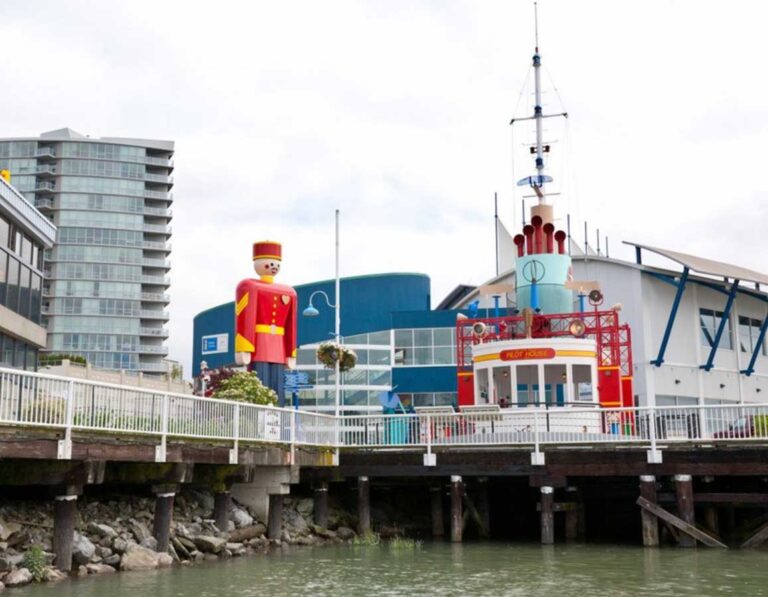
- The World’s Tallest Tin Soldier in New WestminsterLocal AttractionsView →
- Onyx Law GroupFamily LawyerView →
- Taverna Greka New WestminsterGreek RestaurantsView →
- The Old Bavaria Haus New WestminsterGerman RestaurantsView →
- Peranakan Kitchen New WestminsterIndonesian RestaurantsView →
- Mongo Bongo Mongolian Grill New WestminsterBarbecue RestaurantsView →
- Wild Thyme New WestminsterLebanese RestaurantsView →
Refresh & refuel
Where to eat & drink in New Westminster
- 0.7 kmTaverna Greka New WestminsterGreek Restaurants326 Columbia St, New Westminster, BC V3L 1A6
- 0.8 kmThe Old Bavaria Haus New WestminsterGerman Restaurants233 6th St, New Westminster, BC V3L 3A5
- 1.3 kmPeranakan Kitchen New WestminsterIndonesian Restaurants1122 5th Ave, New Westminster, BC
- 1.4 kmMongo Bongo Mongolian Grill New WestminsterBarbecue Restaurants512 6th Ave, New Westminster, BC
- 1.7 kmWild Thyme New WestminsterLebanese Restaurants705 12th St, New Westminster, BC V3M 4J7
Get out there
Attractions in New Westminster
Own a business in New Westminster?
Get discovered by locals and visitors planning their time in the city.
FAQ
New Westminster: good to know
How do I get to New Westminster from downtown Vancouver?
Take the Expo Line SkyTrain from Waterfront or any downtown station to New Westminster Station; the ride is direct with no transfers.
How far is New Westminster from YVR?
Take the Canada Line from the airport to Waterfront and transfer to the Expo Line, or drive across Vancouver and Burnaby. Expect a longer trip at rush hour.
Is New Westminster good for families?
Yes. Queen's Park, Westminster Pier Park, the riverfront boardwalk and the Q to Q Ferry make easy family outings, and the city is compact and transit-friendly.
Why is New Westminster called the Royal City?
Queen Victoria chose the name New Westminster when the city was founded in 1858 as the capital of the Colony of British Columbia, giving rise to the nickname.
When is the best time to visit New Westminster?
Late spring and summer are best, especially during the Hyack Festival around Victoria Day in May, when the riverfront and parks are at their liveliest.
What is the stal̕əw̓asəm Bridge?
It is the new bridge between New Westminster and Surrey that replaced the Pattullo Bridge; it opened fully in February 2026.
Sources for the facts on this page
- Statistics Canada, 2021 Census (via Statistics Canada Daily table, 9 Feb 2022, and New West Record: 'New Westminster eclipses Toronto, Montreal for population density in 2021 census')
- Wikipedia: New Westminster (incorporation, history, SkyTrain stations, Hyack, Irving House)
- City of New Westminster: 2026 Election Results
- Daily Hive: 'New Westminster sees major shakeup as Daniel Fontaine elected mayor' (Oct 2026); Global News 2026 B.C. municipal election results
- New Westminster Schools: qayqayt territorial acknowledgement
- Daily Hive: 'Pattullo Bridge permanently closed as replacement fully opens this weekend' (Feb 2026)
- Daily Hive: Hyack Parade road closures 2026
- City of New Westminster: Q to Q Ferry service agreement renewal (Aug 2025); Freshet News: Q to Q fares in 2026
- Wikipedia: New Westminster station
Keep exploring
Nearby city guides
- South of the Fraser · 4.8 kmSurreyBC's second-largest city: six town centres, big parks, Punjabi food, farm country and a…
- Vancouver & Burrard Peninsula · 7.1 kmBurnabyBig parks, two SkyTrain lines and some of the region's best Asian food, right…
- Tri-Cities & Northeast · 10.8 kmPort MoodyA small city at the head of Burrard Inlet, with shoreline trails, paddling, railway…
- Tri-Cities & Northeast · 11.7 kmPort CoquitlamTerry Fox's hometown: a friendly river city ringed by a 25 km trail, a…
- Tri-Cities & Northeast · 12.6 kmBelcarraA tiny seaside village where Burrard Inlet meets Indian Arm, home to beaches, picnics…
- Tri-Cities & Northeast · 12.7 kmCoquitlamLakes, forest trails and mountain views meet a SkyTrain-served city centre, Korean and Persian…