02 The story
The city’s island neighbourhood
Queensborough has a name with royal roots. Colonel Richard Moody first proposed Queensborough as the name of the colonial capital before Queen Victoria chose New Westminster. The eastern tip of Lulu Island was set aside as a military reserve in the 1860s and became part of New Westminster in 1889. Lots were sold after a bridge connected it to the mainland, and the Queensborough name became official with a post office in 1911.
From the start, Queensborough was home to a mix of newcomers, including Japanese, Chinese, South Asian, Italian, Greek, Slovak, Ukrainian and Finnish families, many of whom came to work along the river. A Sikh gurdwara on Boyne Street dates back more than a century, and the area remains one of the most diverse parts of the city.
Life in Queensborough today
Unlike the rest of hilly New Westminster, Queensborough is flat and largely residential, with many newer townhouses and family homes alongside older houses and some industry along the river. Ewen Avenue is the main street through the neighbourhood.
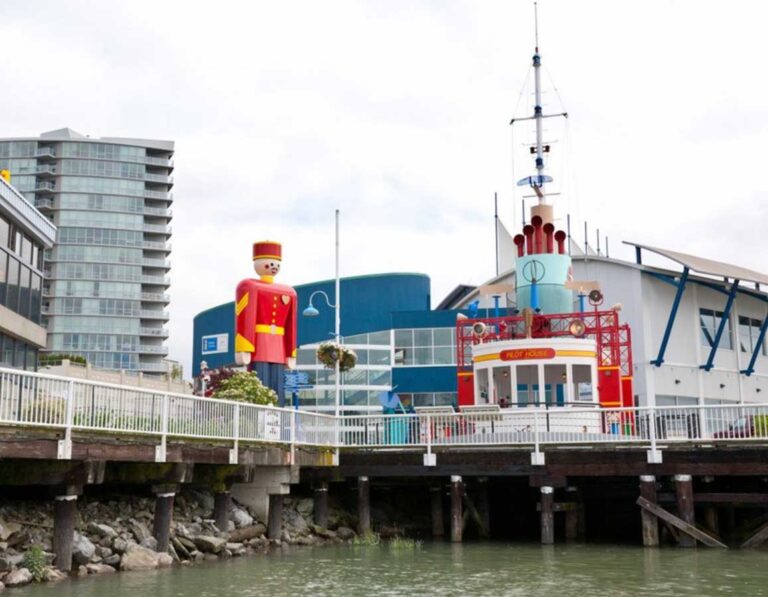
Ryall Park is the community hub, with playgrounds, a spray park, a skate and bike park, and the Queensborough Community Centre, which includes a gym, fitness space and library. Queensborough Landing, near the bridge, is a large shopping centre with big-box stores and restaurants. At the north end, the riverside Port Royal area is where the Q to Q Ferry lands.
Queensborough suits families and commuters who drive or use the bus, with Richmond, Delta and Annacis Island all close by. It feels separate from the rest of the city, which is part of its appeal.