02 The story
A village on Indian Arm
Deep Cove faces east onto Indian Arm, a long fjord that branches off Burrard Inlet. The sheltered bay was long used by the Tsleil-Waututh Nation for fishing and clam harvesting. In the early twentieth century it became a summer escape for Vancouver residents, and after the Second Narrows Bridge opened in 1960 it grew into a year-round community.
The village itself is small: a few blocks along Gallant Avenue and Panorama Drive, with cafés, restaurants and shops close to the water. Panorama Park on the waterfront has a grassy lawn, a small beach and a dock, and is the natural place to start a visit. The Deep Cove Cultural Centre houses a theatre and the Seymour Art Gallery.
Paddling and Quarry Rock
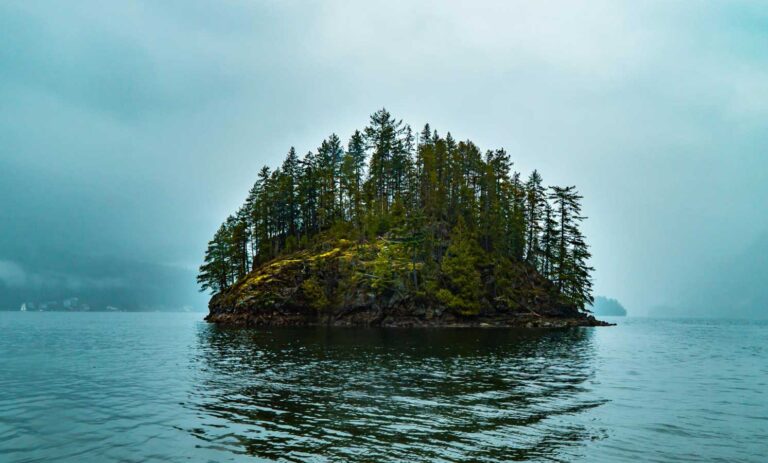
Deep Cove is one of the most popular places in Metro Vancouver to kayak or paddleboard. The water is usually calm, rentals and lessons operate from the waterfront in the warmer months, and you can paddle north along Indian Arm past forested shorelines and small islands.
On land, the eastern end of the Baden-Powell Trail starts near the village and leads to Quarry Rock, a granite lookout with wide views over the cove. The hike is short but has roots and stairs, and it is extremely busy in summer. Go early in the morning or on a weekday, and check the District’s website for any access changes.
Nearby, Whey-ah-Wichen / Cates Park offers beaches and picnic areas, and Mount Seymour Provincial Park is a short drive up the hill for hiking in summer and skiing in winter. Deep Cove suits people who want a quiet, outdoorsy village life and do not mind being at the end of the road.