
City guide · Sea-to-Sky
Whistler city guide
North America's largest ski area, a car-free alpine village and world-famous summer biking, two hours north of Vancouver.
01 At a glance
Welcome to Whistler
Whistler is a year-round mountain resort in the Coast Mountains, home to Whistler Blackcomb and a walkable, car-free village. It suits skiers, mountain bikers, hikers and families looking for a special-occasion getaway from Vancouver.
- Vibe
- Alpine, active, international
- Best for
- Skiing, mountain biking and mountain getaways
- Getting around
- Highway 99, coaches & BC Transit
Whistler at a glance
Whistler is a mountain resort town in the Coast Mountains, about 120 km north of Vancouver at the top of the Sea to Sky Highway. It is best known for Whistler Blackcomb, two linked mountains that together form the largest ski area in North America, but it has become just as busy in summer, when the lifts carry mountain bikers, hikers and sightseers.
The municipality stretches along a narrow valley dotted with lakes. Whistler Village, the car-free heart of the resort, sits at the base of both mountains, with the Upper Village at the foot of Blackcomb a short walk away. Creekside, the original base area, is a few kilometres south. Residential neighbourhoods such as Alta Vista, Alpine Meadows, Emerald, Spring Creek and Cheakamus Crossing spread out along the valley, connected by the paved Valley Trail.
About 14,000 people live here year-round, with thousands more seasonal workers and part-time residents, and the town welcomes more than two million visitors a year. That mix gives Whistler an unusual character: a small town with an international crowd, world-class facilities and a strong local culture of skiing, biking and après.
Whistler suits skiers and snowboarders, mountain bikers, hikers, families on a special holiday, and anyone who wants mountain scenery with the comforts of a full resort. It is equally good for a weekend escape from Vancouver or a week-long trip.
A short history
Whistler sits on the shared, unceded territory of the Squamish Nation (Sḵwx̱wú7mesh) and the Lil’wat Nation (L̓il̓wat7úl). Both peoples travelled, hunted, fished and gathered in the valley for generations. The Squamish knew the area as Sḵwiḵw and the Lil’wat as Cwítima, and the two nations shared the village of Spó7ez near the meeting of Rubble Creek and the Cheakamus River. Today the Squamish Lil’wat Cultural Centre in the Upper Village shares their history and living culture with visitors.
In the 1860s, Royal Navy surveyors named the main peak London Mountain, but locals came to call it Whistler after the high-pitched call of the hoary marmots that live among its rocks. In 1914, Myrtle and Alex Philip bought land on Alta Lake and opened Rainbow Lodge, which became a popular summer fishing resort reached by the new railway. For decades the community was known simply as Alta Lake.
Modern Whistler began in the early 1960s when a group of Vancouver businessmen set out to build a ski resort and bid for the Winter Olympics. Whistler Mountain opened in 1966. In 1975 the province created the Resort Municipality of Whistler, the first resort municipality in British Columbia, and planning for a pedestrian village began. Blackcomb Mountain opened in December 1980, and the two mountains came under one operator in 1997. The PEAK 2 PEAK Gondola linking them opened in 2008. In 2010, Whistler was the Host Mountain Resort for the Vancouver Winter Olympic and Paralympic Games, staging alpine skiing, Nordic events in the nearby Callaghan Valley, and bobsleigh, luge and skeleton at the Whistler Sliding Centre. The athletes’ village later became the Cheakamus Crossing neighbourhood. Vail Resorts bought Whistler Blackcomb in 2016.
Top things to do in Whistler
On the mountains
- Skiing and snowboarding at Whistler Blackcomb: more than 8,000 acres of terrain across two mountains, from groomed beginner runs to alpine bowls and glaciers. Valley ski-outs are usually possible from December through April.
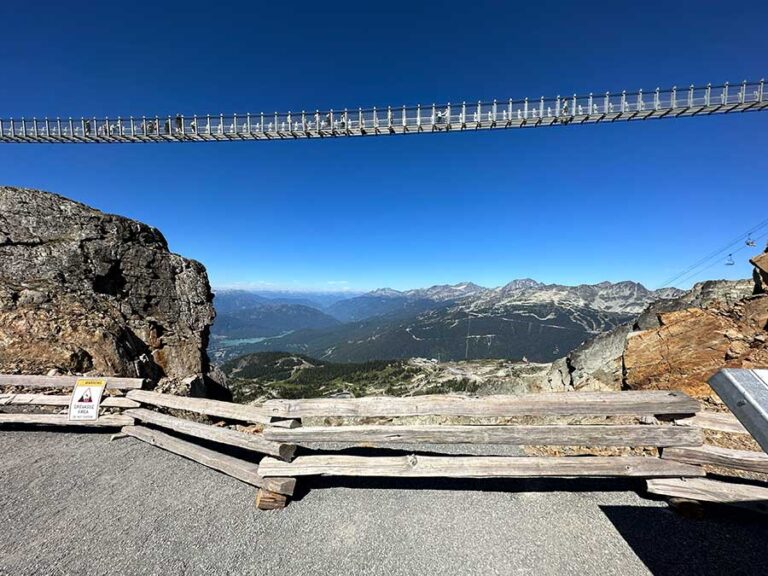
- PEAK 2 PEAK Gondola: the ride between Whistler and Blackcomb mountains includes a record-setting unsupported span of just over 3 km, up to 436 m above the valley floor.
- Whistler Mountain Bike Park: in summer the lower mountain becomes one of the world’s best-known lift-served bike parks, with trails for every level.
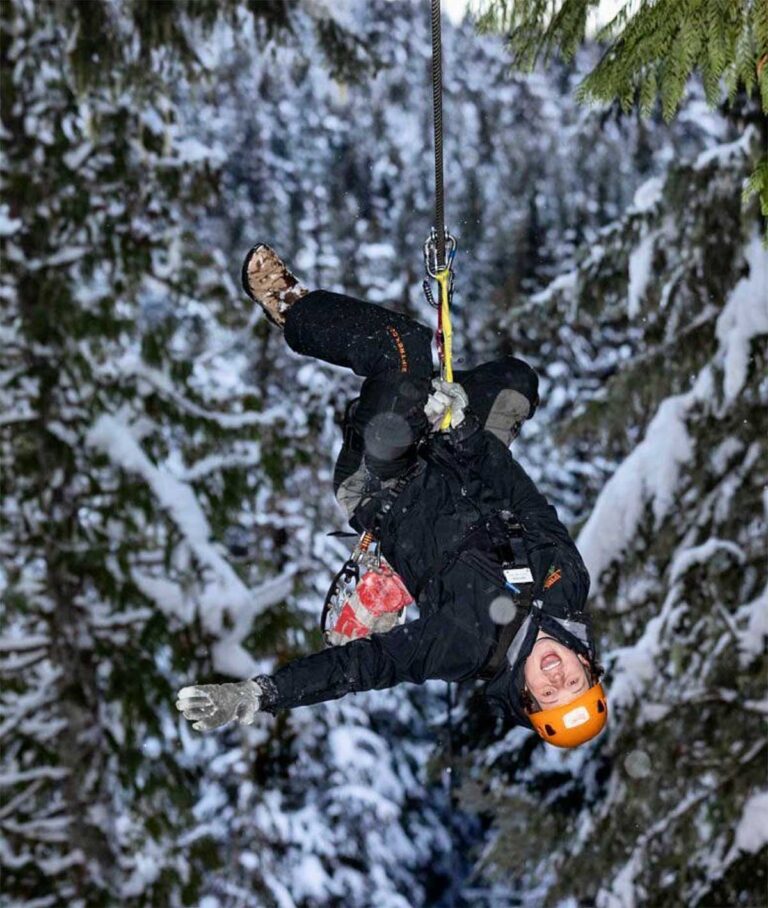
- Alpine sightseeing and hiking: summer gondola rides open up high-alpine walking trails, viewpoints and wildflower meadows.
Lakes and valley trails
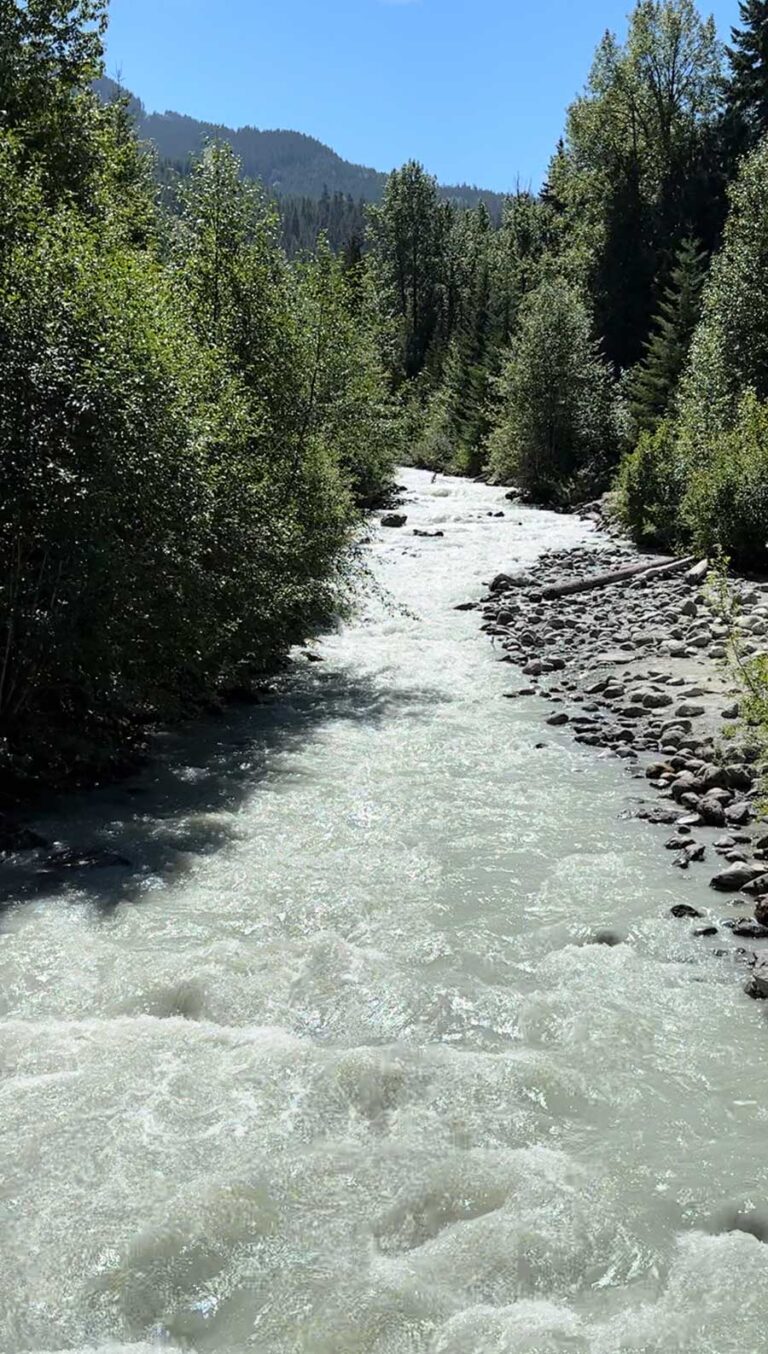
- The Valley Trail is a paved path network connecting the village with neighbourhoods, lakes and parks; ideal for walking, running and cycling.
- Lost Lake Park, a short walk from the village, has a swimming beach, forest trails and a disc golf course, and becomes a cross-country ski and snowshoe area in winter.
- Alta Lake, Alpha Lake and Rainbow Park are summer favourites for swimming, paddling and picnics, with mountain views across the water.
- The Train Wreck trail south of the village leads through the forest to old rail cars covered in graffiti art beside the Cheakamus River.
Arts, culture and Olympic legacy
- Audain Art Museum holds a permanent collection of more than 300 works, including Northwest Coast First Nations masks and a significant group of Emily Carr paintings, plus changing exhibitions.
- Squamish Lil’wat Cultural Centre offers guided tours with Cultural Ambassadors, exhibits on the two nations and Indigenous-inspired food.
- Whistler Museum tells the story of the valley from Alta Lake to the Olympics, and the Maury Young Arts Centre hosts exhibitions and live performances by Arts Whistler.
- Whistler Olympic Plaza in the village has the Olympic rings, outdoor events and a winter skating rink, and Whistler Olympic Park in the Callaghan Valley offers cross-country skiing and snowshoeing.
Food and drink
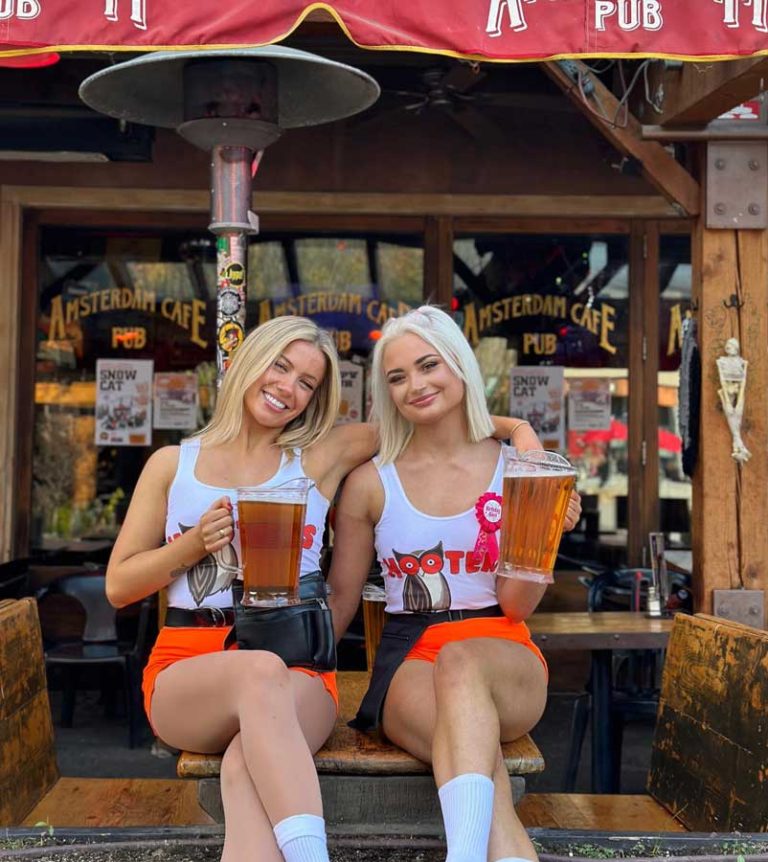
For a town its size, Whistler has an exceptional range of places to eat and drink. The Village Stroll, the pedestrian spine of Whistler Village, and the squares around it hold the densest cluster of restaurants, bars and cafés, from quick breakfasts and bakeries to fine dining and lively pubs. This is also where après happens: from mid-afternoon, patios near the base of the gondolas fill with skiers and riders coming off the mountain.
The Upper Village at the base of Blackcomb has a smaller, slightly calmer cluster, and Creekside has its own handful of restaurants and cafés near the Creekside Gondola. Locals also head to Function Junction, the light-industrial area at the south end of town, for coffee, bakeries and casual spots away from the resort crowds.
Food is a big part of the calendar too. Cornucopia, Whistler’s festival of food and drink, has run for about three decades and fills the village with tastings, dinners and seminars every November. Expect resort prices across the board, and book dinner in advance on weekends and holidays.
Where to stay
Whistler Village is the most popular base: walk to the Whistler Village and Blackcomb gondolas, restaurants and shops without needing a car. It is lively, so ask for a quieter room if you are a light sleeper.
The Upper Village, at the base of Blackcomb, has a more relaxed feel and quick access to the Blackcomb Gondola, with the main village a few minutes’ walk away.
Creekside, a few kilometres south, has its own gondola and is a good choice for families and skiers who want an easy start to the day with fewer crowds. Coaches from Vancouver stop here on the way to the village.
Condos and vacation homes in neighbourhoods such as Alta Vista, Nordic and Blueberry Hill are worth considering for longer stays and groups; many are on the Valley Trail or a bus route. Prices peak over Christmas, New Year, spring break and major summer events, so book early or visit in the shoulder seasons.
Getting around
Driving from Vancouver: Whistler is about 115 to 125 km from downtown Vancouver on Highway 99, the Sea to Sky Highway, via the Lions Gate Bridge, West Vancouver and Squamish. Plan on about 1 hour 45 minutes to 2 hours 15 minutes in good conditions, and longer on Friday afternoons, Sunday evenings and holiday weekends. From Vancouver International Airport allow about 2.5 hours. Winter tires are required on the Sea to Sky Highway in winter; check DriveBC before you go.
Coaches from Vancouver and YVR: There is no TransLink or BC Transit service from Vancouver to Whistler, and no regular passenger train. Instead, private coaches run scheduled trips. YVR Skylynx runs from Vancouver International Airport and from downtown Vancouver (Melville Street) via Squamish and Creekside to the Whistler Gateway Loop, about two hours from downtown, plus a direct airport express. Epic Rides runs an express bus from downtown Vancouver (1088 Melville Street). Schedules and fares change by season, so book ahead, especially in winter.
Local transit: The Whistler Transit System is operated for BC Transit and runs throughout the valley, from Function Junction and Cheakamus Crossing in the south to Emerald in the north. Several village shuttles are free: Route 4 (Marketplace, winter only), Route 5 (Upper Village and Benchlands) and Route 8 (Lost Lake, summer only). Other routes cost $2.75 for an adult single fare, with day and monthly passes available; children 12 and under ride free. You can pay with cash, the Umo app or contactless payment. Route 99, the Pemberton Commuter, connects Whistler with Pemberton.
On foot and by bike: Whistler Village is pedestrian-only, and the Valley Trail makes cycling between neighbourhoods easy from spring to fall. Day parking is available near the village, but many visitors find they do not need a car once they arrive.
Seasons and events
Whistler has two main seasons and two quieter shoulder seasons. Winter brings heavy snow: the valley averages over 400 cm a year, with much more on the upper mountains, and the ski season typically runs from late November into spring. Summers are warm and fairly dry, with July the driest month and the occasional day above 30 °C, perfect for lakes, biking and hiking. Spring and late fall are quieter and cheaper, though some lifts and trails close between seasons.
- Whistler Pride and Ski Festival (late January): A week of skiing, parties and community events; the 2026 festival ran from 25 January to 1 February.
- Crankworx Whistler (summer): The flagship stop of the Crankworx mountain bike festival, with slopestyle, downhill and other competitions. The 2026 edition ran from 24 July to 2 August.
- Cornucopia (November): Whistler’s food and drink festival; the 2026 festival runs from 5 to 15 November.
- Whistler Film Festival (early December): Five days of Canadian and international films, industry events and screenings in the village. The 26th festival runs from 2 to 6 December 2026.
Living in Whistler
Living in Whistler means accepting high housing costs in exchange for an extraordinary lifestyle. Detached homes and chalets in neighbourhoods such as Alta Vista, Alpine Meadows, Emerald and Whistler Cay are among the most expensive in British Columbia, and many private dwellings are owned as second homes or vacation rentals. In the 2021 Census, only a little over half of Whistler’s private dwellings were occupied by usual residents.
To keep workers in town, the municipality and its partners have developed resident-restricted housing, including much of Cheakamus Crossing, the former Olympic athletes’ village. Many seasonal workers live in staff housing or shared rentals, and competition for long-term rentals is intense, especially before the winter season.
Families are served by Myrtle Philip Elementary, Spring Creek Elementary, the francophone École La Passerelle and Whistler Secondary School, all within the valley. There is no university in Whistler; the nearest campuses are in Squamish and on the North Shore. A local health care centre handles emergencies and day-to-day care, with more complex cases transferred to larger hospitals.
Whistler suits people who build their lives around the mountains: ski and bike instructors, hospitality and tourism workers, remote workers, entrepreneurs and retirees. Expect a tight-knit community, a busy events calendar and a lot of time outdoors. Practical notes: secure housing before you move, budget for higher grocery and service costs, and get used to winter driving on the Sea to Sky Highway.
03 Don’t miss
Top things to do in Whistler
- 01
Whistler Blackcomb
Two linked mountains forming North America's largest ski area.
- 02
PEAK 2 PEAK Gondola
A record-setting ride between Whistler and Blackcomb mountains.
- 03
Whistler Mountain Bike Park
World-famous lift-served downhill and flow trails every summer.
- 04
Audain Art Museum
Northwest Coast First Nations art and a notable Emily Carr collection.
- 05
Squamish Lil'wat Cultural Centre
Guided tours and exhibits on the two nations whose territory Whistler shares.
- 06
Lost Lake Park
Beach, forest trails and disc golf a short walk from the village.
- 07
Valley Trail
A paved path linking lakes, parks and neighbourhoods across the valley.
- 08
Whistler Olympic Plaza
Olympic rings, outdoor events and a winter skating rink in the village.
On the map
Around Whistler
Whistler is about 1 hour 45 minutes to 2 hours 15 minutes from downtown Vancouver on Highway 99. YVR Skylynx and Epic Rides coaches run from downtown Vancouver and the airport, and BC Transit's Whistler Transit System serves the valley, with free village shuttles. You rarely need a car once you arrive.
Refresh & refuel
Where to eat & drink in Whistler
Own a business in Whistler?
Get discovered by locals and visitors planning their time in the city.
FAQ
Whistler: good to know
How do I get to Whistler from downtown Vancouver?
Drive about 120 km north on Highway 99, usually 1 hour 45 minutes to 2 hours 15 minutes. YVR Skylynx and Epic Rides run coaches from Melville Street downtown, and Skylynx also runs from the airport.
Is there public transit from Vancouver to Whistler?
No TransLink or BC Transit route runs between them and there is no regular passenger train, so travellers use private coaches or drive. Within Whistler, BC Transit runs local buses, including free village shuttles.
How far is Whistler from YVR?
Allow about 2.5 hours by car from Vancouver International Airport, more in winter conditions or heavy traffic.
When is the best time to visit Whistler?
December to March for skiing and snowboarding, and July to September for mountain biking, hiking and the lakes. Spring and late fall are quieter and often cheaper.
Is Whistler good for families?
Yes. The car-free village, ski lessons, lakes, Lost Lake Park and free village shuttles make it very family-friendly, though prices are high in peak season.
Do I need a car in Whistler?
Usually not. Whistler Village is pedestrian-only, coaches drop off in the village, and local buses and the Valley Trail connect most neighbourhoods.
Sources for the facts on this page
- Statistics Canada, 2021 Census of Population: Whistler (DM), population and land area (via Wikipedia, List of municipalities in British Columbia and Whistler, British Columbia)
- Resort Municipality of Whistler: 2026 general local election results (whistler.ca)
- Wikipedia: Whistler, British Columbia (history, Squamish and Lil'wat Nations, Olympics, climate, schools)
- Wikipedia: Whistler Blackcomb (Blackcomb opening, 1997 merger, PEAK 2 PEAK, Vail Resorts)
- Wikipedia: Whistler Transit System (route list)
- Tourism Whistler (whistler.com): Whistler transit services and fares; arts and culture guide
- Resort Municipality of Whistler: trails and parks
- YVR Skylynx: Downtown Vancouver to Whistler service
- Whistler Film Festival: travel information and 2026 dates
- Fan Vancouver: Vancouver to Whistler bus, shuttle or drive (2026 guide)
- Crankworx: World Tour 2026 dates confirmed for Whistler
- Whistler Cornucopia: 5 to 15 November 2026
- Whistler Pride: 2026 festival, 25 January to 1 February
Keep exploring
Nearby city guides
- Sea-to-Sky · 48.3 kmSquamishClimbing, biking and kiteboarding town at the head of Howe Sound, under the granite…
- North Shore & Howe Sound · 75.9 kmLions BayA small village on the Sea-to-Sky Highway with sheltered beaches below and some of…
- North Shore & Howe Sound · 86.4 kmBowen IslandA short ferry ride from Horseshoe Bay: forest trails, a harbour village and island…
- North Shore & Howe Sound · 87.2 kmNorth Vancouver (District)Canyons, rainforest and ski hills: Lynn Valley, Deep Cove, Edgemont and the mountains of…
- North Shore & Howe Sound · 88.8 kmWest VancouverSeawall villages, old-growth parks and Cypress Mountain on a quiet stretch of coast from…
- Tri-Cities & Northeast · 89.2 kmBelcarraA tiny seaside village where Burrard Inlet meets Indian Arm, home to beaches, picnics…