- Home
- Businesses
- Events
- All Upcoming Events
- Vancouver Events Calendar 2026
- January 2026 Events Calendar in Vancouver
- February 2026 Events Calendar in Vancouver
- March 2026 Events Calendar in Vancouver
- April 2026 Events Calendar in Vancouver
- May 2026 Events Calendar in Vancouver
- June 2026 Events Calendar in Vancouver
- July 2026 Events Calendar in Vancouver
- August 2026 Events Calendar in Vancouver
- September 2026 Events Calendar in Vancouver
- October 2026 Events Calendar in Vancouver
- November 2026 Events Calendar in Vancouver
- December 2026 Events Calendar in Vancouver
- Best Pumpkin Patches Near Vancouver
- Canada Day 2026 Events
- FIFA World Cup 2026 Vancouver Guide
- Nowruz 1405 (Year 2585) in Vancouver: Persian New Year Guide
- Holi Festivals 2026 Guide
- Lunar New Year 2026 Guide
- Polar Bear & Penguin Plunges 2026
- Christmas Events Vancouver 2026
- Remembrance Day 2026
- Halloween Fireworks 2026
- Diwali Fest 2026 Events Guide
- Spirit Halloween Stores 2026 Guide
- Vancouver’s Oktoberfest 2026 Guide
- Attractions
- Things to Do
- Metro Vancouver
- City of Vancouver
- City of Surrey
- City of Burnaby
- City of Richmond
- City of Coquitlam
- City of North Vancouver
- West Vancouver
- City of Langley
- Township of Langley
- Fort Langley
- City of Delta
- City of Maple Ridge
- City of New Westminster
- City of White Rock
- City of Port Coquitlam
- City of Port Moody
- City of Pitt Meadows
- Tsawwassen
- City of Abbotsford
- City of Chilliwack
- Squamish
- Whistler
- Guide
- prev
- next
- Leave a review
- Claim listing
- Bookmark
- Share
- Report
- prev
- next
Ads
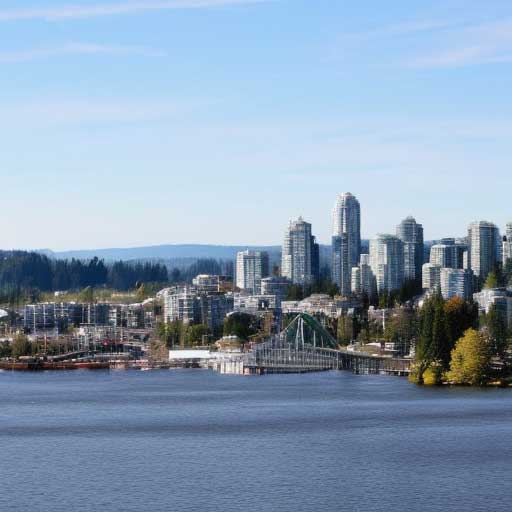
New Westminster, known as the Royal City, is the oldest city in Western Canada and one of the most historic places in British Columbia. Home to about 80,000 people, it sits on a steep hillside above the Fraser River in the geographic centre of Metro Vancouver. It was the first capital of the Colony of British Columbia, and its heritage homes, Victorian downtown, riverfront boardwalk and five SkyTrain stations make it one of the most walkable, connected small cities in the region. New West is also one of the densest cities in Canada, a hub for health care and education, and a busy filming location.
New Westminster sits on the traditional and unceded territories of the Qayqayt First Nation and other hən̓q̓əmin̓əm̓-speaking Coast Salish peoples, including the xʷməθkʷəy̓əm (Musqueam), Kwantlen, Tsleil-Waututh and Stó:lō Nations.
New Westminster at a Glance: Quick Facts
| Fact | Detail |
|---|---|
| Province | British Columbia, Canada |
| Region | Metro Vancouver Regional District |
| Founded | 1859, as capital of the Colony of British Columbia |
| Incorporated | July 16, 1860, the first incorporated city in Western Canada |
| Nickname | The Royal City; New West |
| Named by | Queen Victoria |
| Population (2021 census) | 78,916 (up from 70,996 in 2016) |
| Land area | About 15.6 km² |
| Density | About 5,000 people per km², among the highest in Canada |
| Mayor | Patrick Johnstone (Community First New Westminster), in office since 2022 |
| Next civic election | Saturday, October 17, 2026 |
| Police | New Westminster Police Department (municipal force) |
| Time zone | Pacific Time (UTC−8; UTC−7 in summer) |
| Area codes | 604, 778, 236, 672 |
| Postal codes | Begin with V3L and V3M |
| City Hall | 511 Royal Avenue |
Statistics Canada counted the population again in May 2026, but city-level results are not expected until 2027. Figures on this page use the 2021 census unless stated.
History of New Westminster
Before the city
For thousands of years, the high bluff above the Fraser River was a gathering and fishing place for Coast Salish peoples. The Qayqayt First Nation lived here and along the river, and today it is one of the smallest First Nations in Canada, with a reserve in Queensborough. The river was a vital route for salmon fishing and trade between the coast and the interior.
The Royal City
In 1858 the Fraser River gold rush brought thousands of miners and led Britain to create the Colony of British Columbia. Colonel Richard Clement Moody of the Royal Engineers chose this hillside as the colony's capital in 1859 for its defensive position above the river, and Queen Victoria named it New Westminster, which is why it is called the Royal City. On July 16, 1860, it became the first incorporated city in Western Canada. The Royal Engineers built roads from here, including North Road to Burrard Inlet.
New Westminster was the colonial capital until the colonies of British Columbia and Vancouver Island merged in 1866; Victoria was chosen as the capital of the united colony in 1868. The city remained an important river port, with salmon canneries, sawmills, the BC Penitentiary (opened 1878) and the Royal Columbian Hospital, founded in 1862.
Fire and rebuilding
On the night of September 10, 1898, a fire that started on the waterfront destroyed most of downtown. The city rebuilt quickly in brick and stone, and many of the buildings along Columbia Street date from that period. In the early 1900s New West was a busy hub of the BC Electric interurban railway, connecting it to Vancouver, Burnaby and the Fraser Valley.
Modern New West
As Vancouver grew, New Westminster became more of a residential city. Expo 86 brought SkyTrain, and New Westminster Station was the end of the line until the SkyBridge carried trains to Surrey in 1990. The waterfront was rebuilt with Westminster Quay and the River Market, the old penitentiary site became the Victoria Hill neighbourhood, and the Brewery District in Sapperton replaced a former brewery. In February 2026 the new stal̕əw̓asəm (Riverview) Bridge replaced the 1937 Pattullo Bridge to Surrey. In January 2026, the Globe and Mail ranked New Westminster as Canada's fifth most livable city.
Key dates in New Westminster history
| Year | Event |
|---|---|
| 1859 | Chosen as capital of the Colony of British Columbia |
| 1860 | Incorporated as a city (July 16) |
| 1862 | Royal Columbian Hospital founded |
| 1868 | Capital moves to Victoria |
| 1878 | BC Penitentiary opens |
| 1898 | Great Fire destroys downtown (September 10) |
| 1937 | Pattullo Bridge opens |
| 1980 | BC Penitentiary closes |
| 1986 | SkyTrain arrives for Expo 86 |
| 2026 | stal̕əw̓asəm Bridge replaces the Pattullo Bridge |
Geography of New Westminster
Mainland New Westminster sits on a steep, south-facing slope above the north bank of the Fraser River, with Burnaby to the north and west and Coquitlam to the east. The city also includes Queensborough, on the eastern tip of Lulu Island across the river's North Arm, next to Richmond. Its location at the meeting of the Fraser's main and north arms gives it views of the river, Surrey and Mount Baker. Because the city is so small and steep, many streets climb sharply from the waterfront to Uptown.
New Westminster Neighbourhoods
| Neighbourhood | What it's like |
|---|---|
| Downtown | Columbia Street heritage buildings, River Market, the Quay boardwalk, Anvil Centre, SkyTrain |
| Uptown | Sixth Street and Sixth Avenue shops, Royal City Centre mall, the main library |
| Queens Park | Grand heritage homes and Queen's Park, the city's largest park |
| Brow of the Hill | Dense, older apartment area between Downtown and Uptown |
| Moody Park | Residential area around Moody Park |
| West End | Family neighbourhood near the Burnaby border and 22nd Street Station |
| Connaught Heights | Small residential pocket on the western edge |
| Glenbrooke North | Leafy area near Glenbrook Ravine |
| McBride-Sapperton | Royal Columbian Hospital, Brewery District, Sapperton Station, historic East Columbia Street |
| Victory Heights and Massey-Victory Heights | Quiet residential area near Hume Park and the Brunette River |
| Fraserview | Victoria Hill and riverside condos |
| Queensborough | On Lulu Island across the river, with new townhomes, a strong Sikh community and Queensborough Landing shopping |
New Westminster Climate and Weather
New Westminster has the mild, wet oceanic climate typical of Metro Vancouver. Its sheltered position on the river means slightly warmer summers than coastal Vancouver, and fog sometimes settles on the Fraser on cool fall and winter mornings.
| Season | Typical high | Typical low | What to expect |
|---|---|---|---|
| Winter (Dec–Feb) | 6–8 °C | 0–2 °C | Rainy and cool, occasional snow on the hills |
| Spring (Mar–May) | 11–18 °C | 4–9 °C | Showers and blossoms |
| Summer (Jun–Aug) | 22–25 °C | 12–14 °C | Warm and sunny |
| Fall (Sep–Nov) | 10–20 °C | 4–10 °C | Warm September, rain and fog later |
Figures are approximate, based on Environment and Climate Change Canada normals for the area.
Urban Planning in New Westminster
New Westminster has little room to grow outward, so it grows upward around its SkyTrain stations, especially Downtown, Sapperton and New Westminster Station, while protecting its heritage neighbourhoods. The city has strong rental protection policies, a heritage conservation program for Queens Park and other historic areas, and a goal of becoming a "15-minute city" where daily needs are within a short walk or bike ride. Major issues include heavy commuter and truck traffic passing through the city on routes such as McBride Boulevard and Front Street, the redevelopment of the Royal Columbian Hospital, and new housing on the waterfront and in Queensborough.
New Westminster Architecture and Landmarks
| Building or site | Year | Why it matters |
|---|---|---|
| Irving House | 1865 | One of the oldest surviving houses in mainland BC, now a historic house museum |
| Holy Trinity Cathedral | 1860s, rebuilt 1899 | Historic Anglican cathedral, rebuilt after the Great Fire |
| Columbia Street heritage buildings | 1898–1910s | Brick and stone downtown rebuilt after the fire |
| The Armoury | 1890s | Historic home of the Royal Westminster Regiment |
| Samson V | 1937 | The last steam-powered paddlewheeler on the Fraser, now a museum |
| Anvil Centre | 2014 | Modern cultural and conference centre with a museum, theatre and office tower |
| Westminster Pier Park | 2012 | Waterfront park built on a former industrial pier |
| stal̕əw̓asəm Bridge | 2026 | New four-lane bridge to Surrey |
New Westminster Demographics and Population
The 2021 census counted 78,916 people in New Westminster, up 11% from 2016, one of the fastest growth rates in the region. Most residents live in apartments and condos, and the city has a large share of renters. About 40% of residents were born outside Canada.
Ethnicity and Cultural Diversity
| Group | Approximate share of residents |
|---|---|
| European origin | About 52% |
| South Asian | About 10% |
| Chinese | About 10% |
| Filipino | About 8% |
| Southeast Asian | About 4% |
| Indigenous (First Nations, Métis, Inuit) | About 3% |
| Korean | About 3% |
| Latin American | About 3% |
| Black | About 2% |
| West Asian | About 2% |
Figures are rounded from the Statistics Canada 2021 Census Profile. Queensborough has a large Punjabi Sikh community, and Uptown and Downtown are home to many Filipino, Latin American and newcomer families.
Languages Spoken in New Westminster
English is the main language. Other common languages include Punjabi, Tagalog, Mandarin, Cantonese, Korean, Vietnamese, Spanish and Russian.
Religion in New Westminster
About half of residents reported no religion in 2021, and Christians make up around a third. Sikhs form a significant community, especially in Queensborough, with smaller Muslim, Buddhist and Hindu communities. Historic churches include Holy Trinity Cathedral (Anglican) and St. Peter's Catholic Church, and Queensborough is home to a large gurdwara.
LGBTQ2S+ New Westminster
New Westminster has an active, visible LGBTQ2S+ community. New West Pride runs an annual street festival on Columbia Street each summer, the city has rainbow crosswalks, and local groups and programs support queer and trans residents. A queer-led civic organization, Bee Good New West, is running candidates in the 2026 election.
Homelessness in New Westminster
The 2023 Greater Vancouver homeless count found 203 people experiencing homelessness in New Westminster, a 65% increase from 2020: 57 unsheltered and 146 in shelters or other temporary accommodation. Relative to its population, New Westminster has one of the higher rates of homelessness in the region. The city works with non-profits and BC Housing on shelters, supportive housing and outreach, and has piloted a non-police crisis response program for mental health calls.
New Westminster Economy and Major Employers
New Westminster's economy is dominated by health care, education, government services and retail. Royal Columbian Hospital, one of the largest hospitals in BC and a major trauma centre, is the biggest employer and is in the middle of a large redevelopment. Douglas College and the Justice Institute of British Columbia both have their main campuses here. Retail and dining are concentrated Downtown, Uptown and at Queensborough Landing, and the Brewery District in Sapperton has added offices, shops and health services. Film and TV production is also a major industry, as the city's heritage streets are in high demand with crews.
City Government, Mayor and Council
New Westminster is governed by a mayor and six councillors, all elected city-wide for four-year terms. Voters also elect seven trustees to the New Westminster Board of Education (School District 40). City Hall is at 511 Royal Avenue.
Mayor and city councillors (term 2022–2026)
| Name | Role | Affiliation |
|---|---|---|
| Patrick Johnstone | Mayor | Community First New Westminster |
| Ruby Campbell | Councillor | Community First New Westminster |
| Daniel Fontaine | Councillor | New Westminster Progressives (running for mayor in 2026) |
| Tasha Henderson | Councillor | Community First New Westminster |
| Jaimie McEvoy | Councillor | Community First New Westminster |
| Paul Minhas | Councillor | New Westminster Progressives |
| Nadine Nakagawa | Councillor | Community First New Westminster |
The next civic election is Saturday, October 17, 2026. Mayor Johnstone is seeking a second term against Councillor Daniel Fontaine of the New Westminster Progressives. Both parties are running full council slates, and Bee Good New West is also running council candidates.
Other levels of government
New Westminster is in the federal riding of New Westminster–Burnaby–Maillardville and the provincial ridings of New Westminster-Coquitlam and, for Queensborough, Richmond-Queensborough. Metro Vancouver provides regional services, and TransLink runs transit. Unusually, New Westminster owns its own electrical utility, which supplies power to most homes and businesses in the city.
Policing and Crime in New Westminster
New Westminster has its own municipal police force, the New Westminster Police Department, one of the oldest police departments in Western Canada, overseen by the New Westminster Police Board. New Westminster Fire and Rescue Services provides fire protection. Crime is mostly property crime around transit stations and commercial areas, with Downtown seeing the most calls.
For emergencies call 9-1-1. For non-emergency matters, contact the New Westminster Police Department.
Military in New Westminster
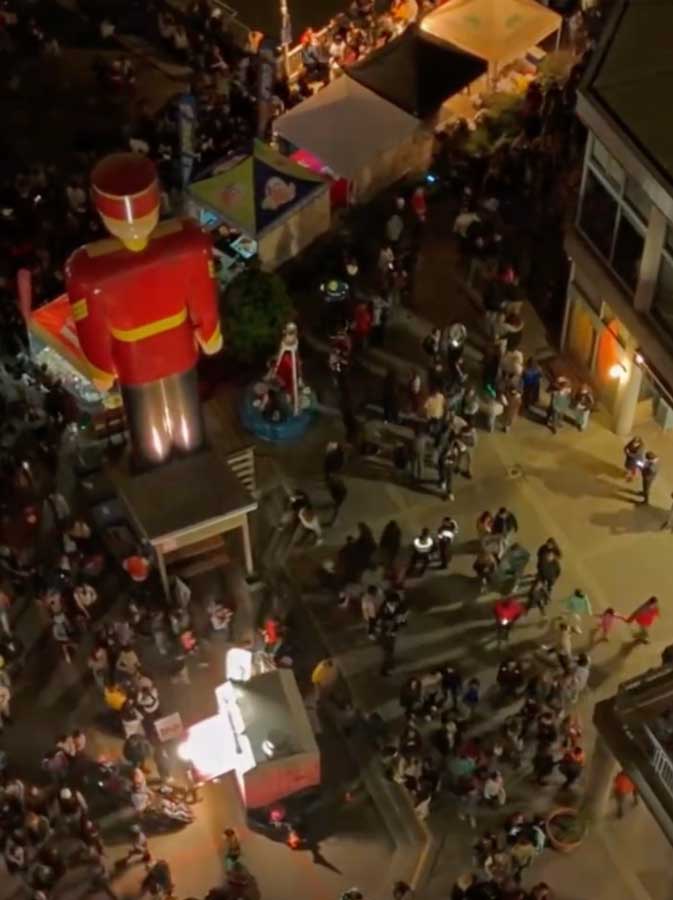
New Westminster has a proud military history. The Royal Westminster Regiment, an infantry unit of the Canadian Army Reserve with roots in the volunteer militia of the 1860s, is based at the historic Armoury on Queens Avenue, which also houses a regimental museum. The Ancient and Honourable Hyack Anvil Battery, which fires anvils in a traditional salute each May, carries on a tradition that began in the colonial era. Remembrance Day is marked each November 11 at the cenotaph in front of City Hall.
New Westminster Sister Cities
| City | Country | Since |
|---|---|---|
| Moriguchi | Japan | 1963, the oldest sister city relationship between BC and Japan |
Public Transport and Getting Around New Westminster
New Westminster has five SkyTrain stations on the Expo Line, more than any city its size in the region.
| Station | Area | Good to know |
|---|---|---|
| New Westminster | Downtown | Next to the Quay and River Market; about 25 minutes to downtown Vancouver |
| Columbia | Downtown | Junction where the Expo Line splits toward Surrey and toward Production Way |
| 22nd Street | West End | Bus connections to Queensborough and Richmond |
| Sapperton | Sapperton | Royal Columbian Hospital and Brewery District |
| Braid | East end | Near the Coquitlam border |
Driving and bridges
Major routes include McBride Boulevard, Royal Avenue, Stewardson Way, Front Street and Brunette Avenue. Bridges include the stal̕əw̓asəm Bridge to Surrey, the Queensborough Bridge to Queensborough and Richmond, and the SkyBridge (SkyTrain only). Heavy through traffic is a long-standing local issue.
Cycling and walking
The Quay boardwalk and Westminster Pier Park offer a long riverfront walk. The BC Parkway, the Central Valley Greenway and the Brunette-Fraser Regional Greenway pass through the city, and Queensborough has a dike trail around the island.
Schools, Universities and Colleges in New Westminster
New Westminster has its own school district, School District 40, serving about 7,500 students. New Westminster Secondary School, one of the largest high schools in BC, moved into a brand-new building in 2021. The district also runs middle schools including Fraser River, Glenbrook and Queensborough, and around ten elementary schools, with French immersion and Montessori programs. The French-language Conseil scolaire francophone also operates in the area.
Colleges and universities
| Institution | Type | Location |
|---|---|---|
| Douglas College | Public college and university transfer, main campus | Downtown |
| Justice Institute of British Columbia | Public safety and justice training, main campus | McBride-Sapperton |
New Westminster Public Library
New Westminster Public Library has a main branch on Sixth Avenue in Uptown and a branch in Queensborough. Membership is free for residents and includes books, e-books, streaming, local history collections and programs for all ages.
Arts and Culture in New Westminster
Museums and galleries
| Venue | What you'll find |
|---|---|
| New Westminster Museum and Archives | City history, in the Anvil Centre |
| Canadian Lacrosse Hall of Fame | Lacrosse history and legends, in the Anvil Centre |
| Irving House | Restored 1865 home of a riverboat captain |
| Samson V Maritime Museum | Last steam-powered paddlewheeler on the Fraser |
| Fraser River Discovery Centre | Interactive exhibits about the Fraser River |
| Royal Westminster Regiment Museum | Military history at the Armoury |
| Arts Council of New Westminster gallery | Local art exhibitions |
Theatre and performing arts
| Venue | What's on |
|---|---|
| Massey Theatre | Large theatre for concerts, dance, musicals and touring shows |
| Anvil Centre Theatre | Concerts, comedy and community performances |
| Queen's Park bandshell | Outdoor summer concerts |
Filming locations
New Westminster is one of the most-filmed cities in Canada for its size. Columbia Street's heritage storefronts, Queens Park's grand old homes and the riverfront are constantly used to stand in for American towns and cities, and residents are used to seeing crews and film trucks on their streets.
Media
- Local news: New Westminster Record, Freshet News
- Regional: CBC, CTV, Global BC and CityNews
New Westminster Nightlife
New Westminster's nightlife is low-key but growing. Columbia Street and the Quay have pubs, restaurants, brewpubs and cocktail bars, and Sapperton and Uptown have cafes and casual dining. The Starlight Casino is nearby in Queensborough. Summer evenings bring concerts and events to the waterfront and Queen's Park. For clubs, Vancouver is about 25 minutes away by SkyTrain.
Parks and Gardens in New Westminster
| Park | Why go |
|---|---|
| Queen's Park | The city's largest park, with a petting farm, spray park, stadium, arena, gardens and forest trails |
| Westminster Pier Park | Riverfront boardwalk, lawns and views of the Fraser |
| River Market and the Quay | Boardwalk walk past restaurants and the Samson V |
| Hume Park | Forest trails and a pool near the Brunette River |
| Moody Park | Sports fields, playground and outdoor pool |
| Tipperary Park | Formal gardens beside City Hall |
| Sapperton Landing | Riverside park in Sapperton |
| Glenbrook Ravine | Forested ravine trail |
| Port Royal Park | Riverside trail and park in Queensborough |
Natural Attractions Near New Westminster
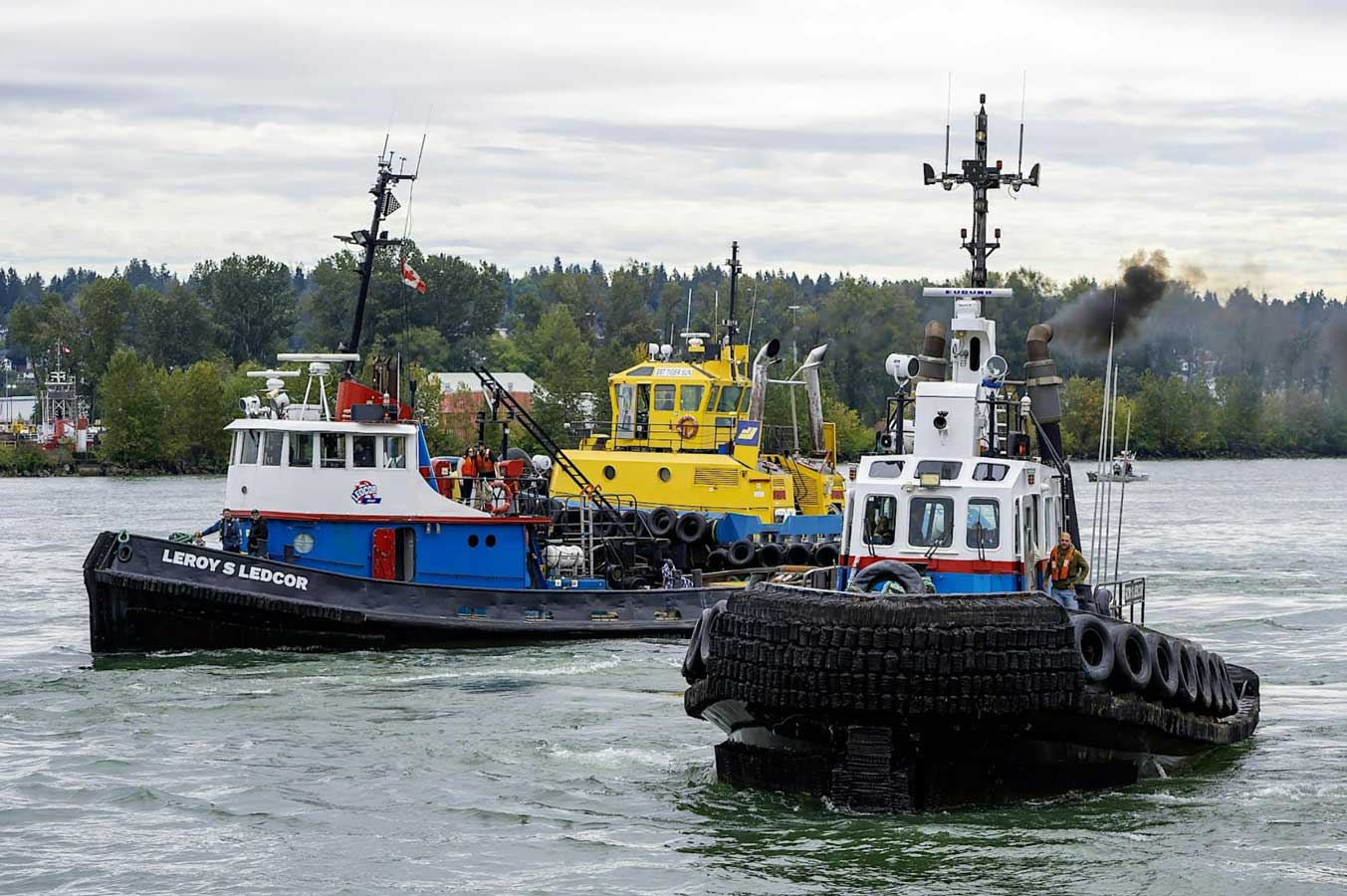
The Fraser River is New Westminster's great natural feature, with log booms, tugboats and seals visible from the boardwalk. The Brunette River and Hume Park offer forest trails, and Queensborough's dikes have views of the river and Mount Baker. Within a short drive or SkyTrain ride are Burnaby Lake Regional Park, Deer Lake, Central Park and Colony Farm Regional Park.
Things to Do in New Westminster: Top Attractions
- Walk the Quay and Westminster Pier Park along the Fraser.
- Explore Columbia Street's heritage buildings and shops.
- Visit the Anvil Centre for the city museum and Lacrosse Hall of Fame.
- Spend an afternoon at Queen's Park, including the petting farm.
- Tour the Samson V paddlewheeler.
- Step back in time at Irving House.
- Catch a Salmonbellies lacrosse game at Queen's Park Arena.
- Shop and eat at the River Market.
- Walk the heritage streets of Queens Park.
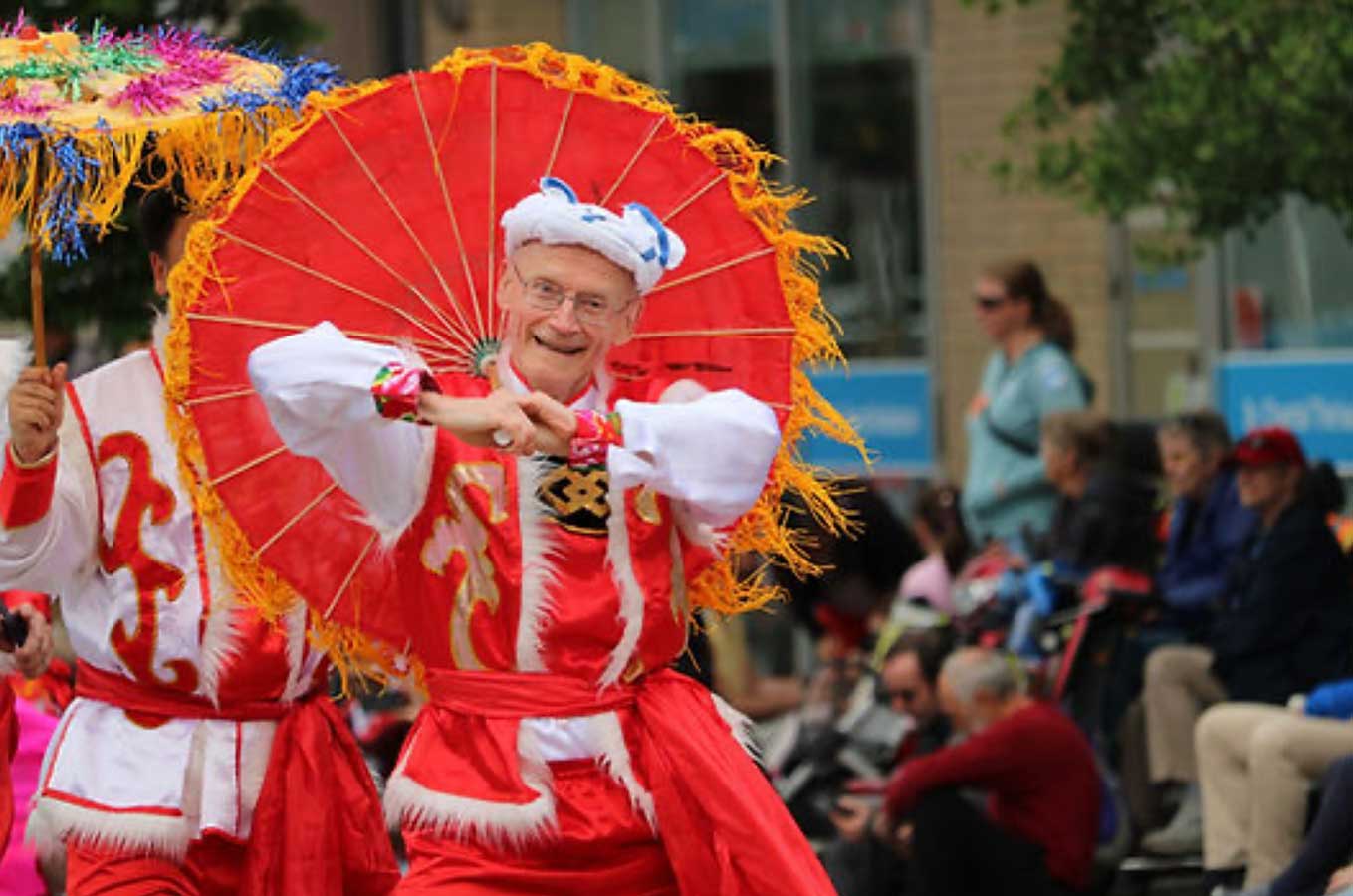
- Join the crowds at Hyack Festival or New West Pride.
Sports Teams and Recreation in New Westminster
New Westminster is lacrosse country. The New Westminster Salmonbellies are one of the most famous teams in Canadian lacrosse, with a long record of Mann Cup championships, and play at Queen's Park Arena. The city also has junior lacrosse, minor hockey and soccer clubs. Recreation facilities include the new təməsewtxʷ Aquatic and Community Centre, the Queensborough Community Centre, Moody Park Arena, Queen's Park Arena and outdoor pools at Hume Park and Moody Park.
Annual Events and Festivals in New Westminster
| Month | Event | Where |
|---|---|---|
| May | Hyack Festival, including the Hyack International Parade and Anvil Battery salute | Downtown and Queen's Park |
| May | May Day celebrations, a tradition dating to the 1870s | Queen's Park |
| June | Columbia StrEAT food truck festival | Columbia Street |
| Summer | New West Pride street festival | Columbia Street |
| Summer | Concerts and events on the waterfront | Westminster Pier Park and the Quay |
| November 11 | Remembrance Day ceremony | City Hall cenotaph |
| December | Holiday lights and festive events | Downtown and Queen's Park |
Dates change from year to year, so check with organizers before you go.
Sustainability and Green City Goals
New Westminster declared a climate emergency and has some of the region's most ambitious climate targets, including steps to cut emissions from buildings and transportation, expand electric vehicle charging and protect its urban forest. Owning its own electric utility lets the city invest directly in local clean energy and EV infrastructure. The city is also strengthening river dikes in Queensborough and along the waterfront to prepare for flooding and sea-level rise.
City Services and Amenities
| Service | How to reach it |
|---|---|
| City Hall | 511 Royal Avenue |
| Emergency (police, fire, ambulance) | 9-1-1 |
| HealthLink BC (nurse advice) | 8-1-1 |
| Hospital | Royal Columbian Hospital (Fraser Health), Sapperton |
| Electricity | New Westminster Electric Utility (city-owned) |
New Westminster FAQ
Why is New Westminster called the Royal City?
Queen Victoria chose the name New Westminster when the city became the capital of the Colony of British Columbia in 1859.
Is New Westminster the oldest city in Western Canada?
Yes. It was incorporated on July 16, 1860, making it the oldest incorporated city west of the Great Lakes.
Is New Westminster part of Vancouver?
No. New Westminster is a separate city with its own mayor, council, police and school district, in the centre of the Metro Vancouver region.
How far is New Westminster from downtown Vancouver?
About 25 minutes by SkyTrain from New Westminster Station to Waterfront Station.
What is the population of New Westminster?
The 2021 census counted 78,916 people.