03 About Port Moody
A small city at the end of the inlet
Port Moody sits where Burrard Inlet comes to an end, on the traditional territory of Coast Salish peoples including the Kwikwetlem and Tsleil-Waututh. It is named after Colonel Richard Clement Moody of the Royal Engineers, and it played a short but important role in Canadian history. The Canadian Pacific Railway chose Port Moody as its western terminus in 1879, and the first scheduled transcontinental passenger train arrived here on July 4, 1886. The terminus soon moved to Vancouver, and Port Moody grew instead as a mill and industrial town before incorporating as a city in 1913.
That railway story is still celebrated every July at Golden Spike Days in Rocky Point Park, and the PoMo Museum in the old railway station tells it year round.
City of the Arts
Port Moody calls itself the City of the Arts, and it backs that up with the Port Moody Arts Centre on St. Johns Street, the Inlet Theatre at the Civic Centre and plenty of public art along the waterfront. Its best-known modern attraction is Brewers Row, a cluster of craft breweries on Murray Street, just behind Moody Centre station.
Parks and water
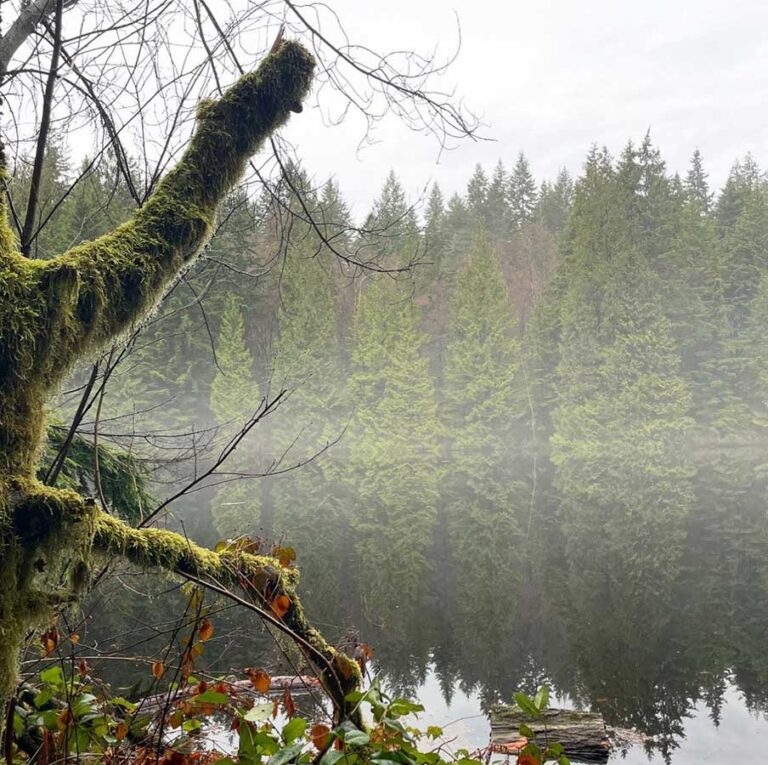
Water is never far away. The Shoreline Trail follows the inlet from Rocky Point Park to Old Orchard Park, passing marshes and mudflats rich in birdlife. Further out, Belcarra Regional Park, Sasamat Lake and Buntzen Lake are a short drive away for swimming, paddling and hiking.
Neighbourhoods at a glance
- Moody Centre: the historic heart, with St. Johns Street, heritage homes and Brewers Row.
- Rocky Point: the waterfront park and pier at the head of the inlet.
- Suter Brook and Newport Village: walkable mixed-use villages near Inlet Centre station.
- Heritage Mountain: hillside family neighbourhoods with forest trails and inlet views.
Port Moody is small enough to explore in a day, but most visitors find a reason to come back.