- Home
- Businesses
- Events
- All Upcoming Events
- Vancouver Events Calendar 2026
- January 2026 Events Calendar in Vancouver
- February 2026 Events Calendar in Vancouver
- March 2026 Events Calendar in Vancouver
- April 2026 Events Calendar in Vancouver
- May 2026 Events Calendar in Vancouver
- June 2026 Events Calendar in Vancouver
- July 2026 Events Calendar in Vancouver
- August 2026 Events Calendar in Vancouver
- September 2026 Events Calendar in Vancouver
- October 2026 Events Calendar in Vancouver
- November 2026 Events Calendar in Vancouver
- December 2026 Events Calendar in Vancouver
- Best Pumpkin Patches Near Vancouver
- Canada Day 2026 Events
- FIFA World Cup 2026 Vancouver Guide
- Nowruz 1405 (Year 2585) in Vancouver: Persian New Year Guide
- Holi Festivals 2026 Guide
- Lunar New Year 2026 Guide
- Polar Bear & Penguin Plunges 2026
- Christmas Events Vancouver 2026
- Remembrance Day 2026
- Halloween Fireworks 2026
- Diwali Fest 2026 Events Guide
- Spirit Halloween Stores 2026 Guide
- Vancouver’s Oktoberfest 2026 Guide
- Attractions
- Things to Do
- Metro Vancouver
- City of Vancouver
- City of Surrey
- City of Burnaby
- City of Richmond
- City of Coquitlam
- City of North Vancouver
- West Vancouver
- City of Langley
- Township of Langley
- Fort Langley
- City of Delta
- City of Maple Ridge
- City of New Westminster
- City of White Rock
- City of Port Coquitlam
- City of Port Moody
- City of Pitt Meadows
- Tsawwassen
- City of Abbotsford
- City of Chilliwack
- Squamish
- Whistler
- Guide
- prev
- next
- Leave a review
- Claim listing
- Bookmark
- Share
- Report
- prev
- next
Ads
Port Coquitlam, known to locals as PoCo, is a friendly, family-focused city of about 62,000 people in northeast Metro Vancouver, set where the Pitt, Coquitlam and Fraser rivers meet. Surrounded by water and with mountain views in every direction, it calls itself "the city of rivers and mountains." PoCo is best known as the hometown of Canadian hero Terry Fox, for its 25 km Traboulay PoCo Trail loop, its revived downtown around Leigh Square, and one of the longest-running May Day celebrations in British Columbia. It is the smallest by area of the Tri-Cities, alongside Coquitlam and Port Moody.
Port Coquitlam sits on the traditional and unceded territories of the kʷikʷəƛ̓əm (Kwikwetlem) and Katzie First Nations and other Coast Salish peoples. Its name comes from the same Kwikwetlem word as Coquitlam, often translated as "red fish up the river," for the sockeye salmon of the Coquitlam River.
Port Coquitlam at a Glance: Quick Facts
| Fact | Detail |
|---|---|
| Province | British Columbia, Canada |
| Region | Metro Vancouver Regional District (Tri-Cities area) |
| Incorporated | March 7, 1913, as a city |
| Nickname | PoCo; "the city of rivers and mountains" |
| Population (2021 census) | 61,498 (up from 58,612 in 2016) |
| Land area | About 29 km² |
| Density | About 2,100 people per km² |
| Mayor | Brad West, in office since 2018 |
| Next civic election | Saturday, October 17, 2026 |
| Famous resident | Terry Fox, who grew up and went to school in Port Coquitlam |
| Time zone | Pacific Time (UTC−8; UTC−7 in summer) |
| Area codes | 604, 778, 236, 672 |
| Postal codes | Begin with V3B, V3C and V3E |
| City Hall | 2580 Shaughnessy Street (the original 1913 City Hall) |
Statistics Canada counted the population again in May 2026, but city-level results are not expected until 2027. Figures on this page use the 2021 census unless stated.
History of Port Coquitlam
Before the city
For thousands of years the Kwikwetlem and Katzie peoples fished, hunted and travelled the Pitt, Coquitlam and Fraser rivers, which were full of salmon and surrounded by rich wetlands. The meeting of the rivers made this an important place for travel and trade.
European settlement began in the 1850s with farms along the Pitt River. In 1862 the Royal Engineers built the Pitt River Road, linking the area to New Westminster.
A railway town
Port Coquitlam owes its existence to the railway. The Canadian Pacific Railway's transcontinental line passed through in the 1880s, with a junction for the branch line to New Westminster. In 1911 the CPR moved its main freight yards here from Vancouver, and residents hoped the new "port" on the Fraser and Pitt rivers would become a major shipping centre. On March 7, 1913, the community split from the District of Coquitlam and incorporated as the City of Port Coquitlam, and the handsome City Hall that still serves the city was built that year.
The First World War, the Great Depression and the failure of the port dream slowed growth. The great Fraser River flood of 1948 hit the city hard, but the completion of the Lougheed Highway the same year helped Port Coquitlam bounce back.
Suburban growth and Terry Fox
From the 1960s on, Port Coquitlam grew quickly as a family suburb, with new neighbourhoods on Mary Hill, Citadel Heights and the north side. In 1980, Terry Fox, a young man from Port Coquitlam who had lost a leg to cancer, began his Marathon of Hope across Canada. Although he died in 1981 before finishing, his run made him a national hero and inspired the Terry Fox Run, which has raised hundreds of millions of dollars for cancer research. Port Coquitlam honours him with a statue, a library, a secondary school and its annual Hometown Run.
In 2002 the city drew international attention when serial killer Robert Pickton was arrested at his farm in Port Coquitlam. The case led to a public inquiry into how police handled reports of missing women from Vancouver's Downtown Eastside.
Recent decades
The new Pitt River Bridge opened in 2009 and the new Port Mann Bridge in 2012, improving connections across the rivers. A major new Port Coquitlam Community Centre opened downtown, and under Mayor Brad West the city has worked to make its downtown a lively place for festivals, events and nightlife, lifting old bans on nightclubs, arcades and pool halls.
Key dates in Port Coquitlam history
| Year | Event |
|---|---|
| 1862 | Royal Engineers build the Pitt River Road |
| 1880s | CPR main line passes through the area |
| 1911 | CPR moves its freight yards to Port Coquitlam |
| 1913 | City of Port Coquitlam incorporated (March 7); City Hall built |
| 1923 | May Day celebrations begin |
| 1948 | Fraser River flood; Lougheed Highway completed |
| 1980 | Terry Fox begins his Marathon of Hope |
| 2002 | Robert Pickton arrested at his Port Coquitlam farm |
| 2009 | New Pitt River Bridge opens |
Geography of Port Coquitlam
Port Coquitlam sits on low land and gentle hills where the Coquitlam River and Pitt River flow into the Fraser. The Pitt River forms its eastern border with Pitt Meadows, the Fraser River its southern edge across from Surrey, and the City of Coquitlam surrounds it to the north and west. Mary Hill rises in the south of the city, and Citadel Heights and the northside neighbourhoods look toward Burke Mountain and the Golden Ears peaks. The CPKC rail yards and the Lougheed Highway cut through the middle of the city.
Port Coquitlam Neighbourhoods
| Neighbourhood | What it's like |
|---|---|
| Downtown | Shaughnessy Street shops, City Hall, Leigh Square, the Port Coquitlam Community Centre |
| Mary Hill | Hillside homes with views over the Fraser, plus the Mary Hill industrial area below |
| Citadel Heights | Family neighbourhood on a hill overlooking the Pitt and Fraser rivers |
| Glenwood | Established central neighbourhood near the Coquitlam River |
| Lincoln Park | Residential area with parks and schools in the west |
| Birchland Manor | Northeast neighbourhood near the Pitt River dikes |
| Oxford Heights | Hillside homes in the north with mountain views |
| Riverwood | Newer family neighbourhood in the north near Hyde Creek |
| Woodland Park | Northern neighbourhood beside Coquitlam's Burke Mountain |
| Dominion Triangle and Fremont Village | Shopping centres and new homes near the Pitt River Bridge |
Port Coquitlam Climate and Weather
Port Coquitlam has a mild oceanic climate with wet winters and warm, dry summers. Being inland and near the mountains, it is usually warmer in summer and a little cooler on winter nights than Vancouver, and it gets more rain than coastal areas.
| Season | Typical high | Typical low | What to expect |
|---|---|---|---|
| Winter (Dec–Feb) | 5–8 °C | 0–2 °C | Rainy and cool, occasional snow |
| Spring (Mar–May) | 11–18 °C | 3–8 °C | Showers and blossoms |
| Summer (Jun–Aug) | 22–25 °C | 11–14 °C | Warm and sunny |
| Fall (Sep–Nov) | 9–20 °C | 3–10 °C | Warm September, rain from October |
Figures are approximate, based on Environment and Climate Change Canada normals for the area.
Urban Planning in Port Coquitlam
Port Coquitlam's planning focuses on keeping its small-city feel while adding housing. The city has made townhouses a central part of its housing plan, encouraged apartments and mixed-use buildings downtown and near Lougheed Highway, and protected industrial land in Mary Hill and Dominion Triangle for jobs. Downtown revitalization, with events in Leigh Square and new restaurants and breweries, is a major priority. Because Port Coquitlam is the only Tri-City without SkyTrain, better transit is one of its biggest long-term goals.
Port Coquitlam Architecture and Landmarks
| Building or site | Year | Why it matters |
|---|---|---|
| Port Coquitlam City Hall | 1913 | Heritage City Hall still in use, the symbol of the city |
| Terry Fox statue | — | Tribute to the city's most famous resident, downtown near City Hall |
| Leigh Square Community Arts Village | — | Downtown plaza and arts space for events and festivals |
| Port Coquitlam Community Centre | 2020s | Large modern recreation centre and library downtown |
| Pitt River Bridge | 2009 | Cable-stayed bridge over the Pitt River |
Port Coquitlam Demographics and Population
The 2021 census counted 61,498 people in Port Coquitlam, up about 5% from 2016. Compared with its neighbours, PoCo has a higher share of families with children and detached homes and townhouses. About a third of residents were born outside Canada.
Ethnicity and Cultural Diversity
| Group | Approximate share of residents |
|---|---|
| European origin | About 57% |
| Chinese | About 12% |
| South Asian | About 6% |
| Filipino | About 5% |
| West Asian (mainly Iranian) | About 4% |
| Korean | About 3% |
| Indigenous (First Nations, Métis, Inuit) | About 3% |
| Latin American | About 2% |
| Southeast Asian | About 2% |
| Black | About 1% |
Figures are rounded from the Statistics Canada 2021 Census Profile.
Languages Spoken in Port Coquitlam
English is spoken by most residents. Other common languages include Mandarin, Cantonese, Persian (Farsi), Tagalog, Punjabi, Korean, Spanish and French. The francophone school École des Pionniers-de-Maillardville is located in Port Coquitlam and serves French-speaking families across the Tri-Cities.
Religion in Port Coquitlam
About half of residents reported no religion in 2021, and Christians make up around 40%, including Catholic, Protestant and Evangelical churches such as Trinity United and Riverside Community Church. There are also smaller Muslim, Sikh, Buddhist and Hindu communities.
LGBTQ2S+ Port Coquitlam
Port Coquitlam is a welcoming community for LGBTQ2S+ residents, with Pride events across the Tri-Cities, inclusive youth programs at community centres and the library, and local support groups. Most of the region's queer nightlife is in Vancouver.
Homelessness in Port Coquitlam
Homelessness in Port Coquitlam is counted as part of the Tri-Cities. The 2025 point-in-time count found about 144 people experiencing homelessness across Coquitlam, Port Coquitlam and Port Moody, down 10% from 160 in 2023, but with more people sleeping outside (69, up from 62). Local advocates have said Port Coquitlam is where many unsheltered people in the Tri-Cities stay. The region's only permanent shelter is in neighbouring Coquitlam, and churches including Trinity United in Port Coquitlam host winter shelters.
Port Coquitlam Economy and Major Employers
Port Coquitlam has a strong base of industrial jobs for its size. The CPKC (Canadian Pacific Kansas City) rail yard is one of the largest on the West Coast, and the Mary Hill and Dominion Triangle areas are home to manufacturing, warehouses, trades and distribution businesses. Retail is concentrated at Fremont Village, the Dominion Triangle, Shaughnessy Station and downtown. Craft breweries, restaurants and small businesses are helping revive the downtown core. Many residents also commute to jobs in Coquitlam, Burnaby and Vancouver.
City Government, Mayor and Council
Port Coquitlam is governed by a mayor and six councillors, all elected city-wide for four-year terms, with no civic political parties. Voters also elect two trustees to the School District 43 board. City Hall is the original 1913 building at 2580 Shaughnessy Street.
Mayor and city councillors (term 2022–2026)
| Name | Role |
|---|---|
| Brad West | Mayor (first elected 2018; acclaimed in 2022) |
| Steve Darling | Councillor |
| Nancy McCurrach | Councillor |
| Darrell Penner | Councillor |
| Paige Petriw | Councillor |
| Glenn Pollock | Councillor |
| Dean Washington | Councillor |
The next civic election is Saturday, October 17, 2026. Mayor Brad West, one of the most outspoken mayors in BC, is seeking a third term and, unlike in 2022, faces challengers.
Other levels of government
Port Coquitlam is mainly in the federal riding of Coquitlam–Port Coquitlam and the provincial riding of Port Coquitlam. Metro Vancouver provides drinking water, sewage treatment and regional parks, and TransLink runs transit.
Policing and Crime in Port Coquitlam
Port Coquitlam is policed by the Coquitlam RCMP detachment, which also serves Coquitlam, Anmore and Belcarra. Port Coquitlam Fire and Emergency Services provides fire protection. Crime rates are generally low to moderate; most reported crime is property crime such as theft from vehicles and shoplifting.
For emergencies call 9-1-1. For non-emergency police matters call Coquitlam RCMP at 604-945-1550.
Military in Port Coquitlam
Port Coquitlam has no Canadian Armed Forces base. Local cadet units train in the area, and the Royal Canadian Legion and the city hold a Remembrance Day ceremony each November 11 at the downtown cenotaph.
Port Coquitlam Sister Cities
Port Coquitlam does not currently promote any formal sister city relationships. Check with the City of Port Coquitlam for the latest information.
Public Transport and Getting Around Port Coquitlam
Port Coquitlam is the only Tri-City without a SkyTrain station, but buses connect to SkyTrain at Coquitlam Central, and the West Coast Express stops in the city.
| Service | Route | Good to know |
|---|---|---|
| West Coast Express | Port Coquitlam Station to Waterfront (Vancouver) and Mission | Weekday rush-hour commuter rail |
| R3 Lougheed Highway RapidBus | Coquitlam Central to Maple Ridge through Port Coquitlam | Frequent express buses |
| 160 | Port Coquitlam to Kootenay Loop (Vancouver) via Coquitlam Central | Key regional route |
| 173 / 174 | Northside loop to Coquitlam Central and Port Coquitlam Station | Local service |
Driving
The Lougheed Highway (Highway 7) runs through the centre of the city, the Mary Hill Bypass links to Highway 1 and the Port Mann Bridge, and the Pitt River Bridge connects to Pitt Meadows and Maple Ridge.
Cycling and walking
The Traboulay PoCo Trail is a 25 km loop around the city following the Coquitlam, Fraser and Pitt rivers and Hyde Creek. It connects to the Pitt River Regional Greenway, Colony Farm Regional Park and the Coquitlam River trails, making PoCo one of the best cities in the region for easy, flat riverside walks and bike rides.
Schools, Universities and Colleges in Port Coquitlam
Port Coquitlam is part of School District 43, which also serves Coquitlam, Port Moody, Anmore and Belcarra. The district uses elementary, middle and secondary schools and offers French immersion, International Baccalaureate and trades programs.
Secondary schools
| School | Type |
|---|---|
| Riverside Secondary | Public (SD43) |
| Terry Fox Secondary | Public (SD43), named after the city's most famous graduate |
| École des Pionniers-de-Maillardville | Public francophone school (Conseil scolaire francophone) |
| Archbishop Carney Regional Secondary | Independent Catholic |
Colleges and universities nearby
Port Coquitlam has no university campus, but Douglas College's David Lam Campus in Coquitlam, Simon Fraser University on Burnaby Mountain and BCIT in Burnaby are all within about 20 to 30 minutes.
Libraries in Port Coquitlam
The Terry Fox Library, part of the Fraser Valley Regional Library system, serves Port Coquitlam. Membership is free for residents and includes books, e-books, streaming, programs for children and adults, and study space.
Arts and Culture in Port Coquitlam
Museums and arts venues
| Venue | What you'll find |
|---|---|
| PoCo Heritage Museum and Archives | Local history, railway heritage and stories of famous residents, including Terry Fox |
| Leigh Square Community Arts Village | Arts studios, gallery and outdoor event space |
| Port Coquitlam Community Centre | Arts programs, event spaces and community activities |
Filming locations
Port Coquitlam's historic downtown, rail yards, farms and riverside trails regularly appear in film and TV productions looking for small-town or rural settings close to Vancouver.
Media
- Local news: Tri-City News, Tri-Cities Dispatch, Freshet News
- Regional: CBC, CTV, Global BC and CityNews
Port Coquitlam Nightlife
Port Coquitlam's nightlife is growing. Downtown along Shaughnessy Street and around Leigh Square has craft breweries, pubs and restaurants, and the city has lifted its old bans on nightclubs, cabarets, pool halls and arcades to encourage new entertainment businesses. Summer evening events in Leigh Square and the downtown core draw big crowds. For bigger nights out, Coquitlam and Vancouver are a short drive or bus ride away.
Parks and Gardens in Port Coquitlam
| Park | Why go |
|---|---|
| Traboulay PoCo Trail | 25 km riverside loop around the city |
| Lions Park | Popular riverside park on the Coquitlam River with playground and picnic areas |
| Gates Park | Sports fields and community events |
| Castle Park | Fields, playground and community events in the north |
| Colony Farm Regional Park | Wetlands and meadows shared with Coquitlam |
| Pitt River Regional Greenway | Dike trail along the Pitt River with mountain views |
| Hyde Creek Nature Reserve | Salmon-bearing creek and hatchery in the north |
| Leigh Square | Downtown plaza for events and markets |
Natural Attractions Near Port Coquitlam
Port Coquitlam's rivers, dikes and wetlands are its biggest natural draw, with herons, eagles, beavers and salmon runs along the Coquitlam River and Hyde Creek. Within a short drive are Minnekhada Regional Park and Burke Mountain in Coquitlam, Pitt Lake and Pitt-Addington Marsh in Pitt Meadows, Golden Ears Provincial Park in Maple Ridge, and Buntzen Lake in Anmore.
Things to Do in Port Coquitlam: Top Attractions
- Walk or bike the Traboulay PoCo Trail, a 25 km riverside loop.
- Visit the Terry Fox statue and learn his story at the PoCo Heritage Museum.
- Explore downtown and Leigh Square for breweries, cafes and events.
- Picnic at Lions Park on the Coquitlam River.
- Catch May Day or the PoCo Grand Prix bike race.
- Watch salmon at Hyde Creek in the fall.
- Bird-watch at Colony Farm Regional Park.
- Walk the Pitt River dikes toward the mountains.
- Shop at Fremont Village and the Dominion Triangle.
- Run the Terry Fox Hometown Run each September.
Sports Teams and Recreation in Port Coquitlam
Port Coquitlam is a sports-loving city with strong minor hockey, lacrosse, soccer, baseball and softball programs. Main facilities include the Port Coquitlam Community Centre (arenas, pool and fitness), the Hyde Creek Recreation Centre, and many sports fields at Gates Park, Castle Park and Lions Park. Residents can swim for free at the city's outdoor pools in summer.
Annual Events and Festivals in Port Coquitlam
| Month | Event | Where |
|---|---|---|
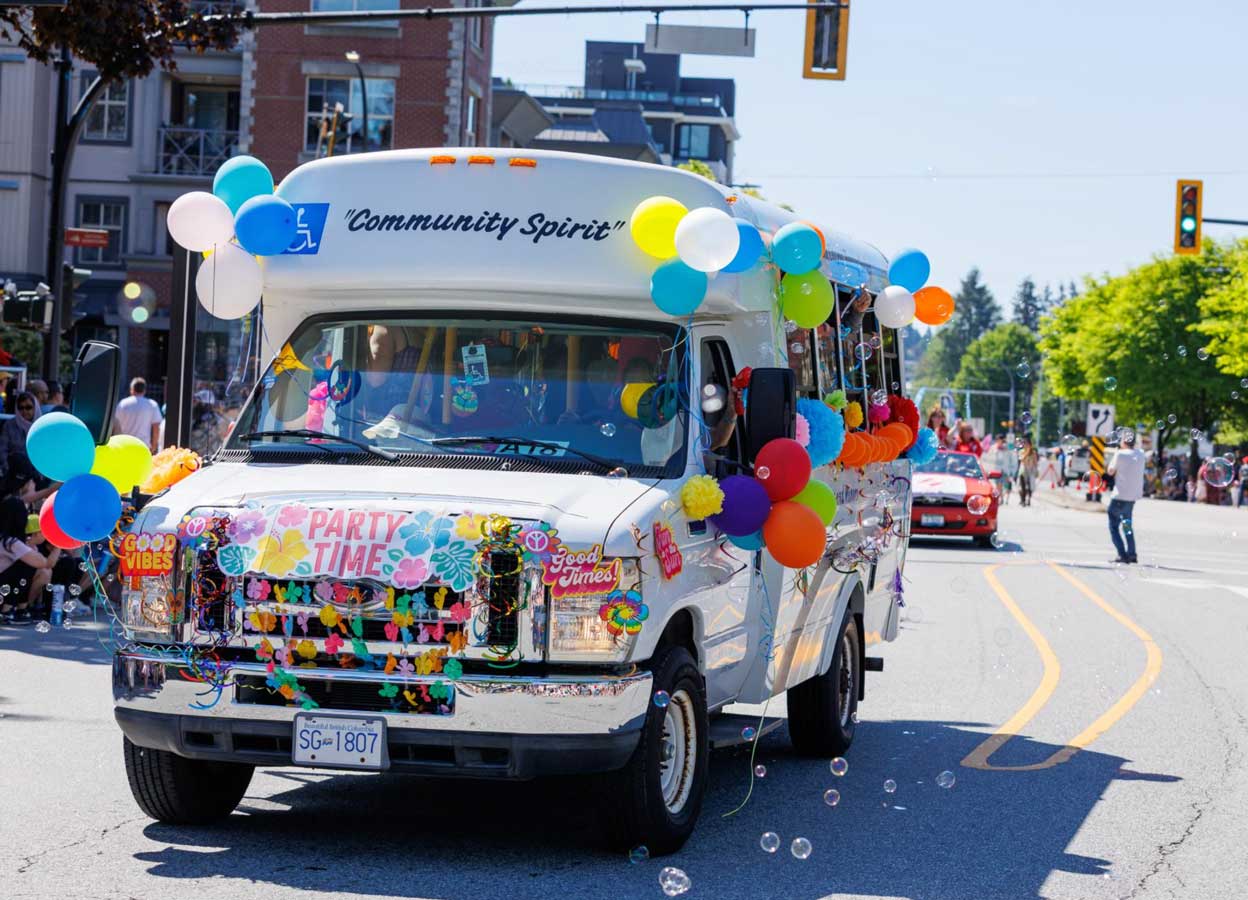
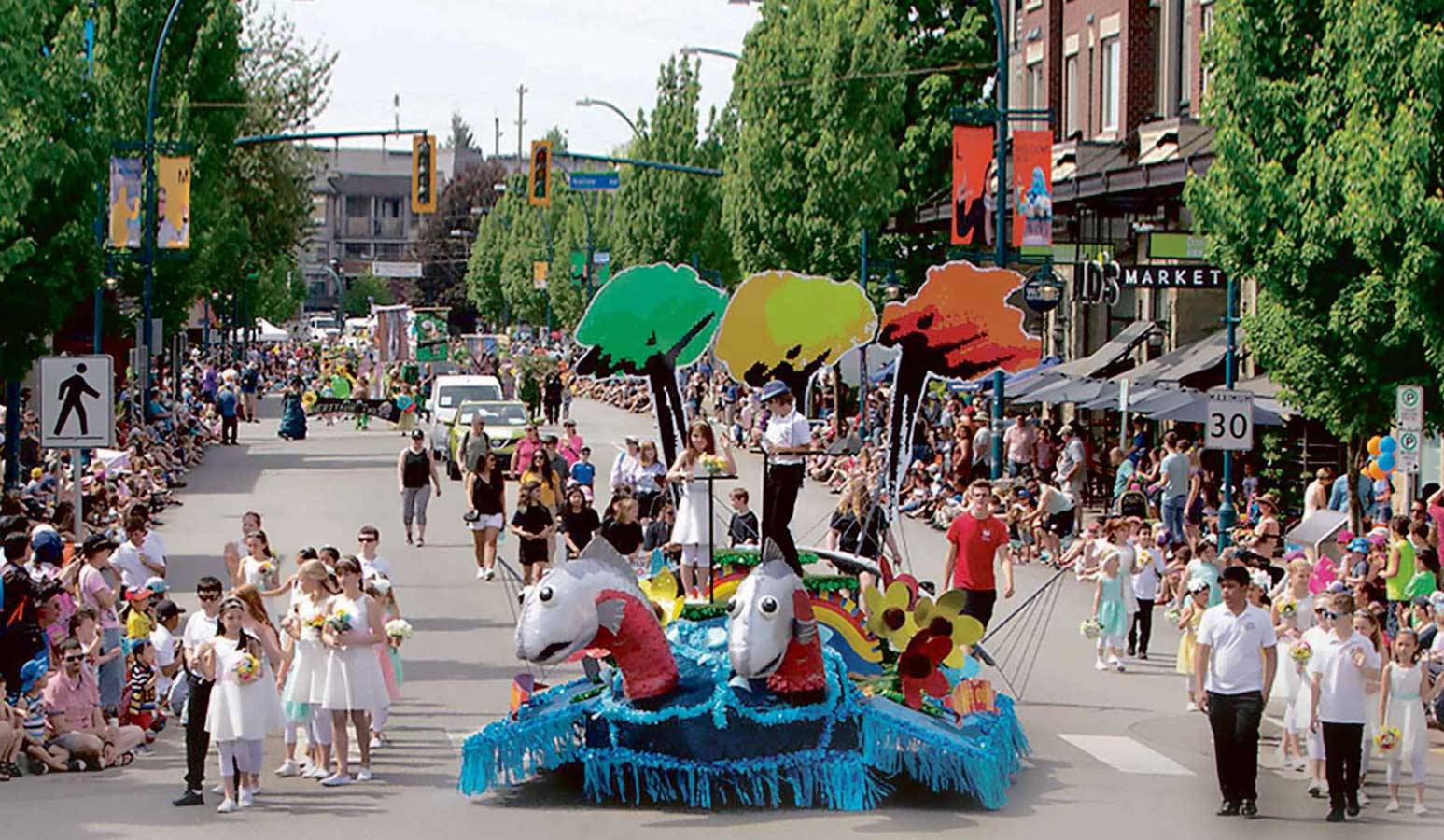
| May | PoCo May Day, one of BC's oldest May Day celebrations, with a parade | Downtown and city parks |
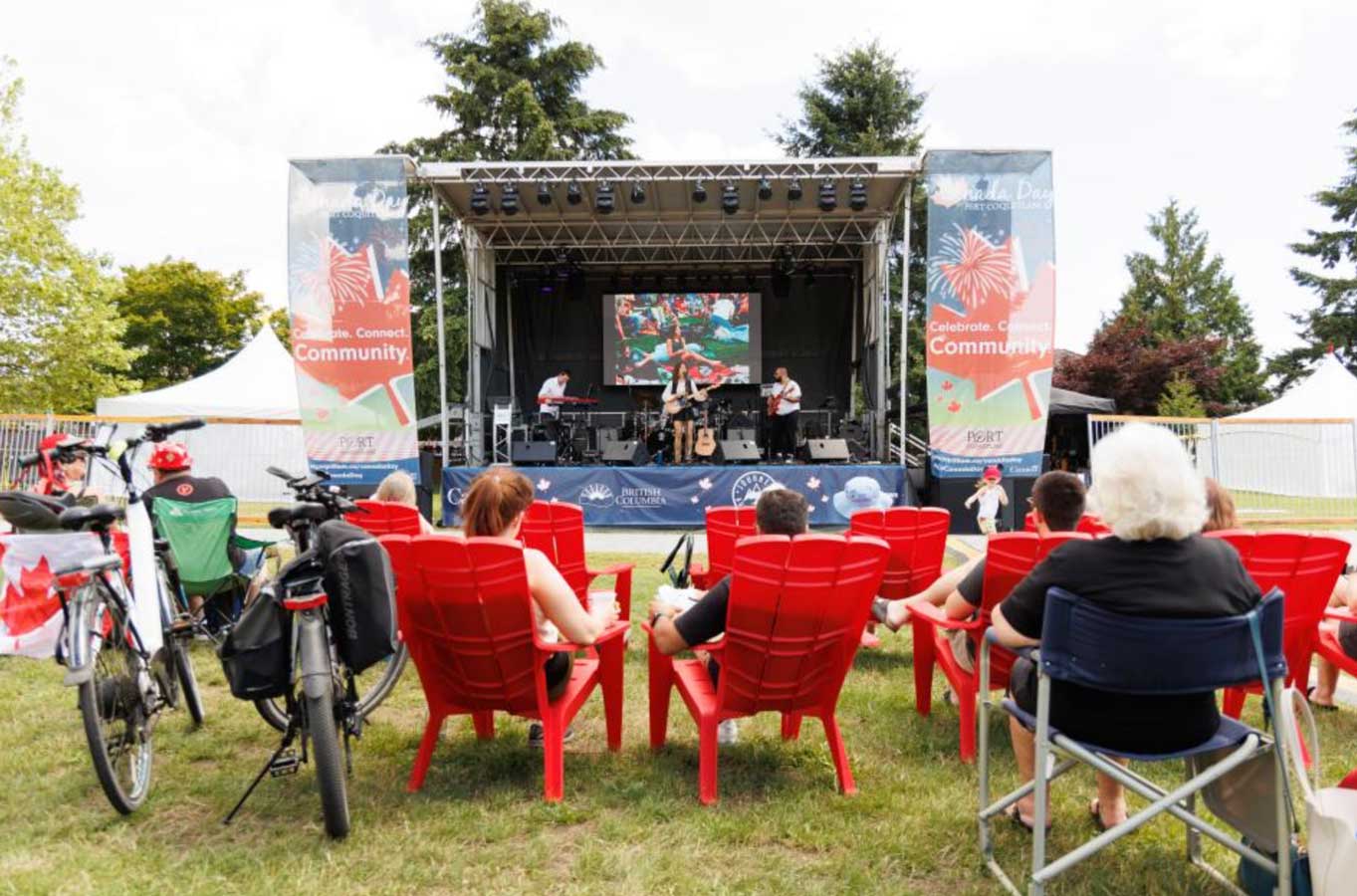
| July 1 | Canada Day celebrations | Port Coquitlam parks |
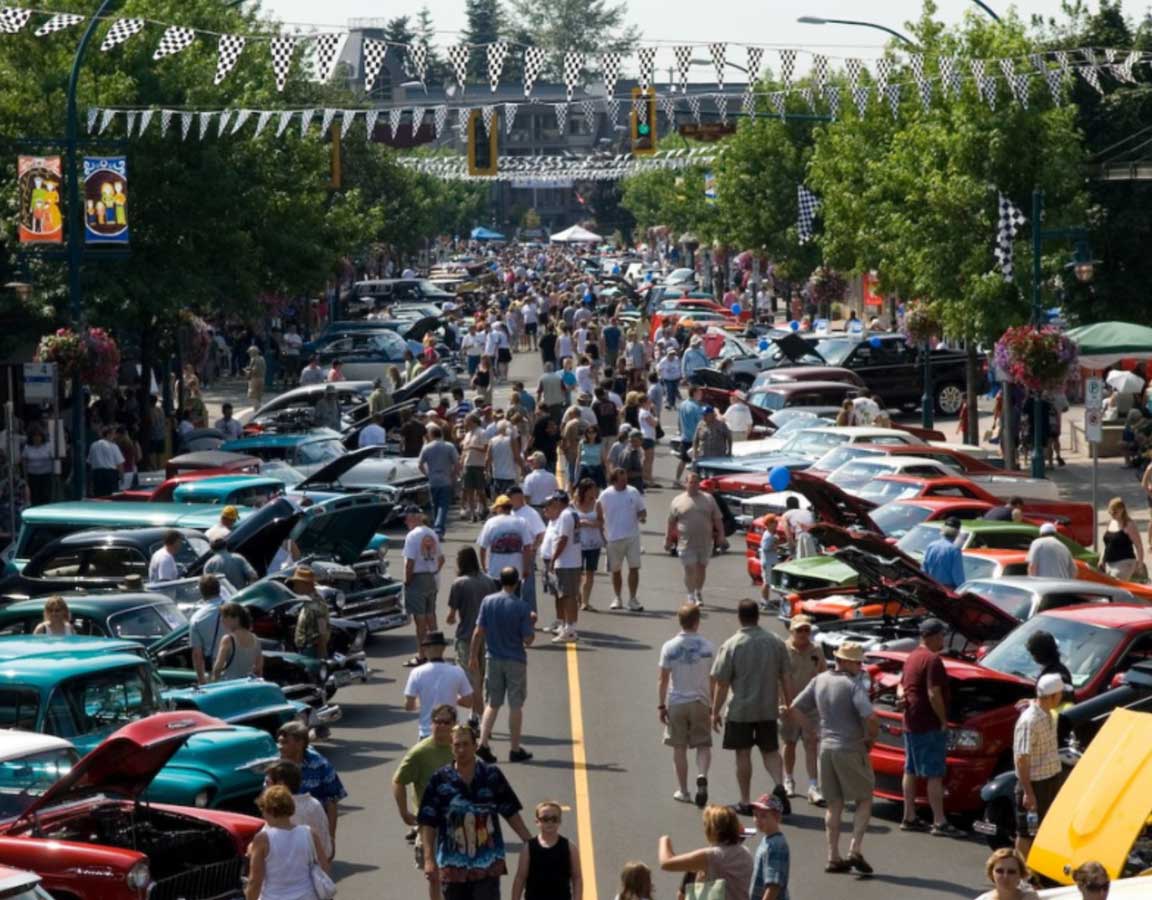
| July | PoCo Grand Prix cycling race, part of BC Superweek | Downtown |
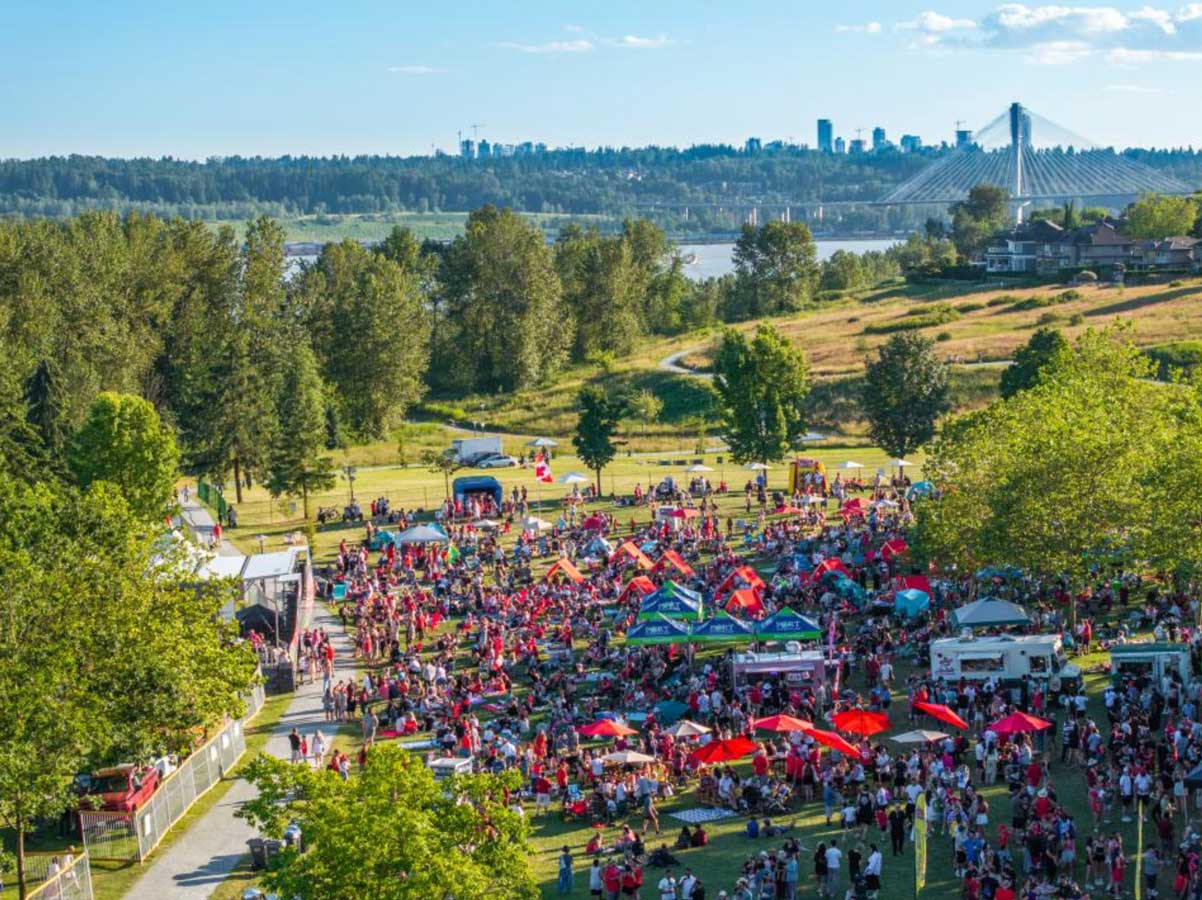
| Summer | Outdoor concerts, movies and events | Leigh Square and city parks |
| September | Terry Fox Hometown Run | Downtown Port Coquitlam |
| November 11 | Remembrance Day ceremony | Downtown cenotaph |
| December | Holiday events and lights | Downtown and Leigh Square |
Dates change from year to year, so check with organizers before you go.
Sustainability and Green City Goals
Port Coquitlam works to protect its rivers, creeks and salmon habitat, reduce greenhouse gas emissions and adapt to flood risks from the Fraser and Pitt rivers. The city has expanded recycling with curbside glass collection and large-item pickup, maintains extensive dikes and pump stations, and is adding EV charging and cycling routes.
City Services and Amenities
| Service | How to reach it |
|---|---|
| City Hall | 2580 Shaughnessy Street; 604-927-5411 |
| Emergency (police, fire, ambulance) | 9-1-1 |
| Coquitlam RCMP non-emergency | 604-945-1550 |
| HealthLink BC (nurse advice) | 8-1-1 |
| Nearest hospitals | Eagle Ridge Hospital (Port Moody) and Royal Columbian Hospital (New Westminster) |
Port Coquitlam FAQ
Is Port Coquitlam the same as Coquitlam?
No. Port Coquitlam and Coquitlam are separate cities with their own mayors and councils. Port Coquitlam split from Coquitlam in 1913.
What is Port Coquitlam known for?
Terry Fox, the Traboulay PoCo Trail, May Day, its rivers and mountain views, and a friendly small-city feel.
Does Port Coquitlam have SkyTrain?
No. It is the only Tri-City without SkyTrain, but the West Coast Express stops in the city and buses connect to SkyTrain at Coquitlam Central.
How far is Port Coquitlam from downtown Vancouver?
About 35 minutes by West Coast Express at rush hour, or 35 to 50 minutes by car depending on traffic.
What is the population of Port Coquitlam?
The 2021 census counted 61,498 people.